What a Titanium Road Bike Feels Like on the Road
The usual shorthand is that titanium feels smooth, but that does not quite explain it. A well-designed titanium frame filters high-frequency chatter from chipseal, expansion joints, and patched pavement without feeling vague through a fast corner. It retains enough feedback that you can feel tire grip and place the bike accurately, yet it is less punishing over four or five hours than many overly stiff race frames.
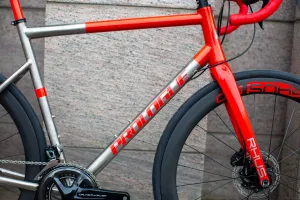
That character comes from more than the material itself. Tube diameter, wall thickness, butting, frame geometry, fork design, wheel choice, and tire pressure all influence ride feel. A titanium frame built around oversized tubing and an aggressive race position can be exceptionally sharp. A frame with more moderate tubes, longer chainstays, and clearance for 30 mm tires can be remarkably composed on poor pavement.
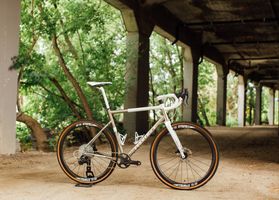
For Canadian riding, tire clearance matters. Modern road tires in the 28 to 32 mm range can be run at sensible pressures, adding speed and control on imperfect roads. Titanium gives a custom builder a strong platform for that approach, especially for riders who want one bike to cover weekday road training, long charity rides, and the occasional hard-packed gravel detour.
Why Titanium Suits Canadian Conditions
Road bikes in Ontario see more than dry summer kilometers. They encounter spring grit, wet fall rides, temperature swings, and occasional salt exposure from early-season roads. Titanium does not rust, and its natural finish does not depend on paint to protect the frame. That makes it especially appealing for riders who prefer a bike that looks purposeful after years of use rather than precious after every ride.
The frame is not maintenance-free. Headsets, bottom brackets, cable routing, fasteners, bearings, chains, and wheels still need regular attention. Salt and road grime can damage components quickly, regardless of frame material. But a titanium chassis removes one major long-term concern and gives you a frame worth rebuilding when the time comes for fresh parts.
Titanium also has excellent fatigue life when properly designed and built. Carbon frames can deliver very low weight and enormous stiffness, while steel offers classic ride quality and straightforward reparability. Titanium occupies its own lane: it is durable without being heavy in the traditional steel-bike sense, and lively without asking the rider to tolerate a harsh ride.
The Case for a Custom Titanium Road Bike
A stock bike is built around averages. That works well for many riders, but averages can become compromises when proportions, flexibility, injury history, or riding goals fall outside the middle of the chart. Custom geometry is where titanium becomes particularly compelling.
A proper custom process starts with how you ride, not just your inseam. Are you comfortable holding a low front end for a four-hour group ride? Do you have long legs and a shorter torso? Are you returning from a back or shoulder issue? Do you need predictable handling on fast descents, or do you want the bike to feel quick in an urban bunch ride? Those answers shape stack, reach, head angle, trail, chainstay length, and the relationship between saddle, bars, and pedals.
A custom build can also solve practical details that often get ignored. You may want full hidden fender mounts for wet-weather training, clearance for 32 mm tires, a second bottle position for long days, or gearing that makes sense for Gatineau climbs rather than a catalogue specification chosen for a broad market. These are not indulgences when they help you ride more often and more comfortably.
At Euro-Sports, a custom Prologue titanium build can be configured around your geometry, riding priorities, finish, and component preferences. The goal is not to add options for their own sake. It is to create a bike whose position and handling make you want to keep riding when the road surface, weather, or distance gets demanding.
Titanium Grades and Tube Design
Most performance titanium frames use 3AL/2.5V titanium, an alloy containing 3% aluminum and 2.5% vanadium. It is valued for its strength, corrosion resistance, and ability to be formed into butted bicycle tubes. Some builders also use 6AL/4V titanium for specific parts where its higher strength makes sense, although it is harder to work with.
The label on the material matters less than the frame builder's execution. Tube profiles, weld quality, alignment, heat management, and intended rider weight all matter. A good builder tunes the structure as a whole. Bigger tubes can add lateral stiffness for a powerful sprinter; more refined tube sections can improve compliance for a lighter endurance rider. There is no universal titanium feel because there is no universal titanium frame.
Where Titanium Makes More Sense Than Carbon or Steel
Carbon remains the choice for riders focused on the lowest possible weight, maximum aero integration, and race-specific performance. A high-end carbon road bike can be exceptionally efficient, especially when a deep aero frame and integrated cockpit suit the rider's position. If your priority is criterium racing, frequent travel with a modern race bike, or every available watt, carbon deserves serious consideration.
Steel has its own loyal following for good reason. It offers a beautiful ride, can be economical in some builds, and works exceptionally well for all-road and touring applications. Its trade-off is weight and corrosion management, although a well-cared-for steel frame can last for decades.
Titanium is strongest for the rider who wants a long-term performance bike without treating it like a museum piece. It is an excellent choice for the athlete who values comfort but still wants responsive handling, for the rider whose fit warrants custom geometry, and for anyone who sees a bicycle as a platform that can evolve through several wheelsets, groupsets, and generations of components.