Start With How You Actually Ski
Classic and skate skiing demand different equipment, technique, and priorities. A classic ski needs a grip zone beneath the foot that engages when you compress the ski, then releases to glide forward. A skate ski is built for edge-to-edge power transfer and a long, clean glide without a grip zone. Trying to make one ski do both jobs usually produces a compromised experience.
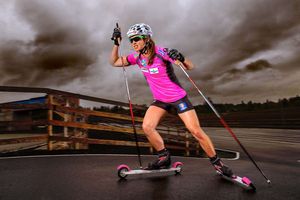
Classic skiing is a strong choice for skiers who enjoy Gatineau Park’s extensive track network, want a lower technical barrier to entry, or prefer long aerobic outings. It can still be very fast and highly technical at race pace. Skate skiing suits athletes who enjoy a more dynamic, powerful stride and often train on wider, firm grooming. It also transfers well to roller skiing and structured interval work.
If you are new to the sport, classic skiing can offer the more forgiving start. If you already run, cycle, or roller ski and want a high-output winter training platform, skate may be the better fit. It depends on your preferred terrain, local trail access, and willingness to build technique.
Nordic Skis Ottawa Conditions Put Flex First
Length gets attention because it is easy to see. Flex matters more because it determines whether a ski works under your body. A ski that is too soft will drag or feel unstable. One that is too stiff may never engage its grip zone for classic skiing, leaving you slipping on every climb.
Ski flex is selected using your weight, but weight is only the starting point. Height, skiing ability, technique, foot size, and how aggressively you load the ski also matter. A powerful skier can often control a firmer ski than the chart suggests. A developing skier may be better served by a more stable, manageable flex even if they fall at the high end of a recommended range.
This is especially relevant around Ottawa, where firm, transformed snow can reward a ski with good torsional stability and a properly selected camber. On softer snow, a ski that is too stiff can feel demanding and wander. The goal is not simply the stiffest or lightest ski. It is a ski that comes alive when you stand on it.
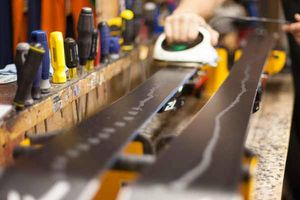
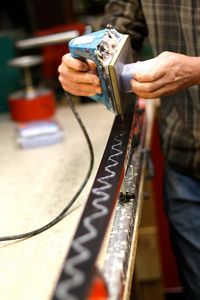
A proper fitting process checks each ski individually. Manufacturing tolerances exist, even in premium race skis. A matched pair with the right pressure distribution is worth more than a model name or a catalogue specification alone.
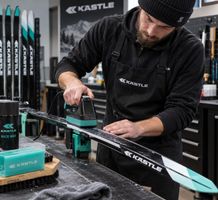
At Euro-Sports we use a 100% digital measurement tool called SkiSelector to test each ski for you personally before you buy so you get the perfect ski for you.
Why Digital Testing Replaces Paper Tests
Traditional paper tests (ink or marker methods) are now obsolete. They are highly subjective, inconsistent, and cannot measure dynamic flex under real skiing forces. SkiSelector is the only machine in North America that tests skis 100 % digitally using precise, repeatable, data-driven measurements , eliminating human guesswork completely.
Skin or Waxable Classic Skis?
Skin skis have become a serious option for Ottawa skiers, not merely a convenience product. Their integrated mohair or synthetic skin insert provides reliable grip without applying kick wax, making them ideal for busy athletes, variable conditions, and skiers who want to get from car to trail quickly. Modern premium skin skis glide far better than older no-wax designs, particularly when the skins are kept clean and treated correctly.
The trade-off is that a skin ski has a narrower performance window than a well-waxed race ski. Skin choice, ski flex, snow temperature, and moisture still affect glide and grip. A skin that is worn, dirty, or glazed can become slow. It should be cleaned regularly and replaced when the fibres have lost their effectiveness.
Waxable classic skis remain the top choice for skiers who enjoy fine-tuning for snow conditions and want maximum race performance. When kick wax is selected correctly and the ski is properly fitted, the feeling is hard to beat: secure climbing grip with a free, fast glide. The catch is that Ottawa weather can change quickly, and waxable skis require practice, testing, and occasional adjustment at the trailhead.
For many dedicated skiers, the practical answer is two pairs over time: a dependable skin ski for everyday training and a waxable performance ski for racing or prime conditions. There is no need to buy both on day one, but it is a sensible long-term setup for athletes who ski often.
Boots and Bindings Should Not Be an Afterthought
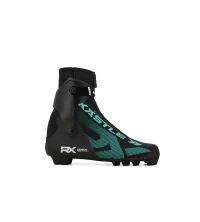
Your boot is the main connection between your body and the ski. A high-performance ski paired with a loose, poorly fitted boot will never feel precise. For skate skiing, look for a supportive cuff, secure heel hold, and enough lateral stiffness to direct force into the ski edge. For classic skiing, a more flexible forefoot supports a natural kick-and-glide motion, while a snug heel still prevents energy loss.
Fit should be close without pressure points or numbness. Nordic boots should accommodate a technical ski sock, not a thick winter sock used to compensate for poor fit. If your feet are consistently cold, the cause may be a boot that is too tight, a restricted circulation issue, or moisture management rather than insufficient insulation.
Bindings must match the boot sole system and should be mounted with your ski’s intended balance point in mind. A small adjustment can change the way a ski feels, particularly on skin classics. This is not the place to guess. Correct setup helps preserve the predictable, efficient feel that premium Nordic equipment is designed to deliver.