Start with the demands of your event
Race nutrition begins with a realistic look at the course. Estimate how long you expect to be moving, not how long the winner will take. Then consider the intensity. A two-hour road race ridden near threshold can be harder to fuel than a three-hour steady gravel event because hard efforts reduce how much your gut wants to process.
For events lasting less than about 75 minutes, a carbohydrate-rich pre-race meal and some fluid may be enough. A carbohydrate mouth rinse or small amount of sports drink can help in some high-intensity efforts, but there is rarely a need to force down gels during a short race.
Once you are racing beyond 90 minutes, carbohydrate intake becomes a performance tool. Most athletes should start around 30 to 60 grams of carbohydrate per hour. For longer endurance events, athletes who have trained their gut can often handle 60 to 90 grams per hour, and sometimes more using multiple carbohydrate sources. That upper range is useful, not mandatory. Taking more than you can absorb is an expensive way to turn a strong race into a stomach problem.
How to prepare race nutrition from training data
Your best nutrition plan is built on rides, runs, skis, and brick sessions. Do not save a new drink mix, gel format, or high-carbohydrate target for race morning. Train your gut as deliberately as you train your legs.
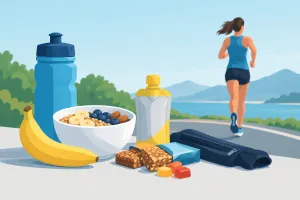
Choose one or two fueling formats you genuinely like: drink mix, gels, chews, bars, bananas, rice cakes, or soft real food. As intensity rises, simpler and lower-fibre options are usually easier to manage. On a fast group ride or a hilly trail race, opening a wrapper and chewing a dense bar may be less practical than a gel or drink. On a long gravel event, food with more texture can be welcome if it sits well.
During key long sessions, practise your race sequence. Set an alert on your watch or head unit if you tend to forget early. Start eating before you feel hungry, typically within the first 20 to 30 minutes of a long event. Hunger is a poor race-day signal because it often arrives after you are already behind on energy.
Record three things after each test: how much carbohydrate you took per hour, how much fluid you drank, and what happened to your energy and stomach. A short note is enough. Over several sessions, patterns emerge quickly. You may find that 75 grams per hour feels excellent on the bike but 50 grams is more comfortable while running, or that a cold drink works well in July but is unappealing during a February ski race.
Build a fuel schedule, not a pocketful of products
Count the carbohydrate in every item before race day. A bottle of drink mix may provide 40 grams, a gel 25 grams, and a chew packet 45 grams. Once you know the totals, turn them into a schedule.
If your target is 60 grams per hour for a four-hour cycling event, you need about 240 grams of carbohydrate available, plus a small buffer for delays or an unexpectedly long day. That could be a mix of bottles and gels rather than eight separate items. Pack fuel in the order you will use it, especially if your jersey pockets, bento box, or running belt are crowded.
Keep the plan flexible around race dynamics. A hard opening climb, a technical singletrack section, or a fast paceline may make eating difficult. Take fuel during easier terrain, on descents only when safe, or before the technical section begins. Waiting for the perfect moment often means waiting too long.
Plan fluid and sodium for Canadian conditions
Fluid needs vary more than carbohydrate needs. Heat, humidity, heavy kit, pace, and individual sweat rate all matter. Some athletes can race comfortably on 400 to 500 milliliters per hour in cool conditions, while others need closer to 750 milliliters or more in summer heat. Drink to a plan refined in training, while paying attention to thirst and conditions.
A practical sweat-rate check is to weigh yourself before and after a one-hour session in representative weather, accounting for what you drank. You do not need laboratory precision. You are looking for a useful starting point, not a number to obsess over.
Sodium is equally individual. If you finish training with salt marks on your clothing, sweat heavily, or race for several hours in heat, an electrolyte drink or sodium-containing fuel can be valuable. Many athletes land somewhere around 300 to 600 milligrams of sodium per hour, but needs can be higher. Do not treat sodium as a substitute for drinking, and do not take large doses blindly. The right amount is the amount that supports steady intake and leaves you feeling normal, not bloated or thirsty all day.
Cold races deserve the same attention. On skis, on winter bikes, or during early-season running events, thirst can be muted while sweat loss continues under layers. Insulate bottles where practical and choose fuel you can open with gloves or cold fingers. Frozen gels are not a race strategy.
Eat well before the start
The day before a race, shift toward familiar carbohydrate-rich meals and reduce the foods most likely to upset your stomach. For a long event, this may mean extra rice, potatoes, pasta, bread, fruit, or cereal across the day rather than one oversized pasta dinner. Keep protein and vegetables in the mix, but avoid turning the evening meal into a fiber challenge.
On race morning, aim for a familiar meal about two to four hours before the start. The exact quantity depends on body size, start time, and appetite, but carbohydrate should lead the plate. Toast with jam, oatmeal with banana, rice, cereal, pancakes, or a bagel are dependable options when they have been tested in training.
If you are nervous or facing an early start, a smaller meal plus a carbohydrate drink may be easier than forcing down solid food. Top up with a gel, chews, or sports drink in the final 15 to 30 minutes if it fits your plan. Avoid trying to compensate for missed breakfast with a huge hit of fuel on the start line.