What Ski Tuning Performance Really Means
Fast skis are not simply heavily waxed skis. Performance comes from managing friction. Snow crystals create heat and moisture as the ski moves over them, and the base needs the right structure and wax hardness to control that interaction. Too much suction in wet snow slows the ski. Too little protection in cold, sharp snow leaves the base dry and draggy.
A proper tune begins with the base itself. A base that is oxidized, scratched, glazed, or contaminated cannot make full use of premium glide wax. Wax can improve it temporarily, but it will not correct an uneven surface or a structure that is wrong for the conditions.
For classic skis, tuning performance includes another critical variable: grip. The kick zone must provide traction without creating drag. That is a balance between ski camber, skier weight, snow condition, and wax or skin selection. A skier who is slipping on climbs wastes energy. A skier with too much grip material loses speed everywhere else.
Start With a Healthy, Structured Base
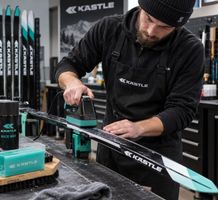
The base is your ski's running surface, and it deserves more attention than the final race wax. Regular hot waxing keeps polyethylene hydrated and helps protect it from abrasion. But when a ski has visible scratches, uneven glide, or a chalky grey appearance, it may need a more complete service.
Base grinding restores flatness and adds a deliberate structure. This pattern of fine grooves channels water away from the ski and reduces suction. The ideal structure depends on snow temperature, humidity, crystal shape, and whether the snow is fresh, transformed, or artificial.
A fine structure generally suits colder, drier conditions. A coarser structure can move more water in warm or humid snow. The trade-off matters. A structure designed for spring slush can feel slow and overly aggressive on a dry midwinter morning, while a very fine cold-snow structure may feel sticky as temperatures rise toward freezing.
This is where a precision assessment pays off. At Euro-Sports, SkiSelector technology helps guide ski preparation decisions using the skier, the ski, and expected conditions rather than relying on a generic seasonal tune. It is especially useful for athletes building a race setup or serious recreational skiers who want confidence that their equipment suits the snow they actually ski.
When to Service the Base
There is no single kilometer count that applies to every skier. Artificial snow, abrasive cold tracks, road grit near trailheads, and frequent training all accelerate wear. A skier doing several sessions a week may benefit from regular maintenance throughout the season, while an occasional tourer may need a full service less often.
Watch for a base that looks dry, has deep scratches, or feels noticeably slower than comparable skis on the same day. If your skis pull to one side, feel inconsistent from ski to ski, or have not been stone ground in several seasons, bring them in before race week. A race is the wrong time to discover that the base needs more than a quick wax.
Match Wax to the Snow You Have
Wax selection is where many skiers either overcomplicate the process or leave speed on the table. The goal is not to own every product on the wall. It is to use a sensible system consistently and make decisions from temperature, humidity, and snow condition.
For regular training, a durable hydrocarbon glide wax matched broadly to the temperature range is often the smart choice. It protects the base, keeps the skis moving well, and reduces the effort required between sessions. For racing, a more specific wax and finish can deliver a meaningful advantage, particularly when the snow is fine, fresh, wet, or highly transformed.
New snow and old snow can demand different choices even at the same air temperature. Fresh crystals tend to be sharper and more abrasive. Older snow has rounded crystals and can hold more free moisture. Track temperature also matters more than the reading on your car dashboard. A sunny afternoon can produce a warm surface over a frozen base, while a sheltered section stays significantly colder.
If you are preparing for an event, test on the course whenever possible. Apply one option to each ski or compare sections of a test ski, then ski the same terrain repeatedly. Pay attention to acceleration, coasting speed, and how the ski behaves after several minutes. The fastest option on the first downhill is not always the best option once contamination and moisture build up.
Classic Grip Should Feel Effortless
Classic skiers often judge grip by whether they can climb the steepest hill. That matters, but it is not the full test. Good grip should engage under a deliberate kick and release immediately during the glide phase. If the ski drags on flat terrain, your grip zone may be too long, too thick, or too soft for the conditions.
The correct kick zone starts with fit. A classic ski needs camber suited to the skier's body weight and technique. An experienced skier with strong compression can often use a different setup than a newer skier of the same weight. Skin skis simplify daily preparation, but they still need care. Clean skins glide better, and skin material must be selected and positioned correctly for the conditions and skier.
For waxable classics, temperature is only one input. Snow texture, track glazing, and humidity can change the answer quickly. Carrying a small range of grip options is practical for longer outings, but avoid endlessly layering product on top of a setup that is not working. Clean the kick zone, reassess the snow, and start again with a thinner, more deliberate application.