CLOSED MONDAY OCT 12TH FOR THANKSGIVING DAY

FREE SHIPPING ON ORDERS $100 +

Euro-Sports | 11 days ago

Best Cycling Bib Shorts for Comfort and Speed

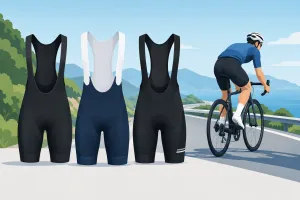
The best cycling bib shorts are the pair you stop noticing halfway through a hard ride. That sounds simple, but it is a demanding brief: the fabric must stay put, the straps must disappear, and the chamois must support you without creating heat, pressure, or bulk. For Canadian riders moving between indoor training, rough spring pavement, long gravel days, and fast group rides, shorts are not an accessory. They are contact-point equipment.


A premium pair costs more because the details are harder to get right. Better shorts use shaped multi-panel construction, high-recovery fabric, carefully placed seams, and a chamois designed for a particular riding position. The right pair will make a bigger difference to comfort than chasing another few grams from your bike.

What Makes the Best Cycling Bib Shorts?


Fit comes before brand, price, or an impressive fabric specification. Bib shorts should feel gently compressive through the thighs and seat when standing, then settle naturally when you bend into your normal riding position. They should not tug at the shoulders, restrict a deep breath, or leave folds of loose material behind the knees.


The chamois is the padded insert, but “more padding” is not the same as more comfort. A well-designed chamois uses different foam densities to protect high-pressure areas while keeping the edges thin enough to move with your pedal stroke. Its shape must also match your posture. A low, aggressive road position generally loads the front of the saddle differently than a more upright gravel or endurance position.


Fabric matters most after the first hour. Look for dense, opaque stretch fabric with enough compression to resist muscle vibration and prevent the legs from creeping upward. Premium knits recover their shape after repeated washing and are less likely to become see-through when stretched over the saddle. On hot days, breathability helps, but a very thin fabric can sacrifice durability and support.


Finally, assess the finishing details. Wide silicone or woven leg grippers should hold without creating a tight ridge. Flat or minimal seams reduce rubbing. A clean-cut leg opening can be exceptionally comfortable, provided the short’s pattern keeps it in place. Mesh bib straps are usually the best choice for summer, while a more structured strap system can provide welcome stability for long-distance riding.


Choose Bib Shorts for the Ride You Actually Do


There is no single best pair for every cyclist. Start with your longest regular ride, your preferred bike, and the conditions you ride through most often.


Road riding and fast group rides

For road riders, a close fit and a road-specific chamois are usually the priority. Choose supportive compression, stable leg grippers, and a pad that works when your pelvis is rotated forward on the hoods or drops. Race-oriented shorts can feel firmer when first tried on, but should not feel restrictive. They are built to remain stable during high-cadence efforts rather than feel soft and loose in a change room.


If your rides commonly run two to four hours, mid-to-high-density foam and excellent seam placement are worth paying for. The difference is often most obvious late in the ride, when tired posture makes every small rub more noticeable.


Gravel and mixed-surface riding

Gravel creates more vibration, more movement on the saddle, and often more time in the saddle than a comparable road ride. A slightly more forgiving chamois and durable fabric are sensible choices. Many gravel riders prefer cargo bib shorts with low-profile thigh or back pockets for gels, a phone, or a light layer.


Pockets are useful only if they do not distort the fit. A loaded thigh pocket should remain stable while pedaling, and items should be easy to access without pulling at the fabric. For long remote rides, that practical storage can outweigh the small aero advantage of a cleaner race short.


Indoor training

Indoor sessions are hot, sweaty, and repetitive. Prioritize breathable straps, quick-drying fabric, and a chamois that stays comfortable through a concentrated hour of seated work. You do not necessarily need your most expensive outdoor bibs for the trainer, but a poor pair will make indoor riding feel far longer than it is.


Keep at least one dedicated trainer pair in rotation if you ride indoors often. Washing them immediately after each session protects both the fabric and your skin.


Long-distance and endurance riding

For fondos, bikepacking days, and long summer missions, stability is the defining quality. The best endurance bib short is not always the plushest one. It is the pair that keeps the chamois exactly where it belongs after six hours, even when you are climbing, standing, stopping, and remounting.


Consider your saddle at the same time. Bib shorts cannot fully compensate for a saddle that is too wide, too narrow, or poorly positioned. If several quality shorts produce pressure in the same location, a professional bike fit or saddle assessment is a smarter next step than buying thicker padding.


How Bib Shorts Should Fit

Try bib shorts on as you would ride: pull them fully into place, settle the chamois under your sit bones, then bend at the hips. The pad should lie flat with no bunching at the groin. The leg panels should feel even from front to back, and the straps should sit against the body without digging in.


A few fit checks separate a promising pair from one that will become a drawer resident:


-The chamois stays close to the body while walking and bending.

-The leg grippers are secure but do not cause numbness or deep marks.

-The straps have light tension and do not pull the short upward at the front.

-There is no exposed or strained fabric when you assume your riding position.


Sizing varies sharply among performance brands. Do not automatically buy the size printed on your usual jeans or casual athletic shorts. Use the brand’s hip and thigh measurements, and treat a fit consultation as part of the purchase when you are investing in a premium pair. A technically excellent short in the wrong size is still the wrong short.


The Chamois Test: Pressure, Not Thickness

Chamois comfort depends on pressure management, moisture control, and movement. A thick pad may initially feel luxurious, yet it can bunch, retain sweat, and create friction during a long ride. A thinner, shaped pad can be more effective when it matches your saddle and riding position.

All of our staff are active cyclists, xc-skiers, and runners - so we know how important it is to have equipment properly tailored to an athlete's specific needs.


NOTE! No appointments needed for ski wax service - just bring your skis in and we will go from there!


Most repairs are completed within 48 hours of drop-off. Give us a call at 613-422-5616 to confirm turnaround time for your specific service.

Euro-Sports

More Posts

How to Clean Disc Brakes Without Contaminating PadsHow to Clean Disc Brakes Without Contaminating Pads
How to Clean Disc Brakes Without Contaminating Pads

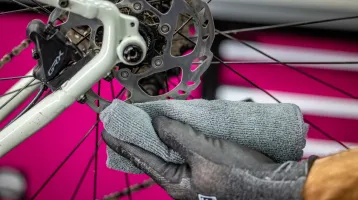
A rotor that squeals through every stop after an Ottawa rain ride is not merely annoying. It is usually telling you that grime, chain lubricant, trail spray or cleaning residue has reached the braking surface. Knowing how to clean disc brakes properly restores consistent lever feel and modulation without creating the bigger problem: contaminated pads.


Disc brakes need very little routine attention, but they are intolerant of the wrong products. Treat the rotor and pads as a clean zone, separate from the drivetrain and frame-cleaning work. A few careful minutes after a wet, gritty ride can prevent noise, preserve pad life and keep your bike ready for the next training block.

Steel Versus Titanium Frames: Which Fits You?Steel Versus Titanium Frames: Which Fits You?
Steel Versus Titanium Frames: Which Fits You?

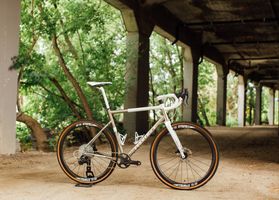
A cold April road outside Ottawa tells you more about a frame than a showroom lift ever will. Broken pavement, grit on the shoulders, a crosswind and four hours to ride: this is where steel versus titanium frames becomes a real choice, not just a material debate. Both can produce a fast, beautifully finished custom bike that stays relevant for years. The better option depends on the way you ride, the fit you need and what you expect your bike to endure.


For riders considering a custom road, gravel or all-road machine, the question is rarely, “Which material is best?” It is, “Which material will make me want to ride this bike in five years?” Steel and titanium answer that question differently.

Gravel Versus Cyclocross Bikes ComparedGravel Versus Cyclocross Bikes Compared
Gravel Versus Cyclocross Bikes Compared

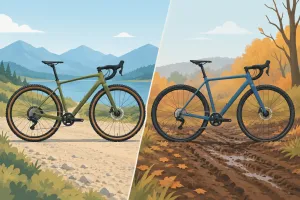
A fast drop-bar bike with room for wider tires can look like either choice from across the parking lot. That is why the gravel versus cyclocross bikes question causes so much uncertainty for riders shopping for one capable machine. The overlap is real, but the priorities are different: one is built to stay composed for hours over changing surfaces; the other is built to attack a hard, technical race for about an hour.


For Ottawa riders, that distinction matters. A Saturday on the Prescott-Russell Trail, the rail trail toward Carleton Place, or a long backroad route in the Gatineau can involve washboard gravel, pavement, mud, sand, and plenty of distance. A cyclocross course can pack off-cambers, barriers, steep run-ups, grass, ruts, and repeated accelerations into a compact circuit. Pick the bike for the riding you actually do most often, not just the event that sounds exciting in January.

How to Set Tire Pressure for Faster Bike RidesHow to Set Tire Pressure for Faster Bike Rides
How to Set Tire Pressure for Faster Bike Rides

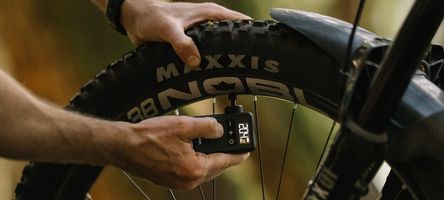
A 28 mm road tire at 95 psi can feel quick on a perfectly smooth road and punishingly slow on Ottawa pavement. The same applies off-road: a gravel tire inflated for hardpack can skip across loose corners, while a mountain bike tire set too soft can fold under load. Learning how to set tire pressure is one of the fastest, least expensive ways to improve comfort, control and rolling speed.


The target is not the highest pressure your tyre allows. It is the lowest pressure that gives dependable support, avoids rim strikes or tire squirm, and suits the surface you are actually riding. That sweet spot changes with rider weight, bike weight, tire volume, casing, terrain and conditions.

Tubeless Versus Clincher Tires for Your RideTubeless Versus Clincher Tires for Your Ride
Tubeless Versus Clincher Tires for Your Ride

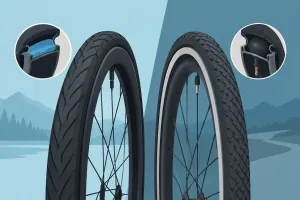
A pothole on an Ottawa spring road, loose limestone on the Prescott-Russell Trail, or a rooty Gatineau singletrack can make tire choice feel very real, very quickly. The tubeless versus clincher tires decision is not about following a trend. It is about choosing the system that gives you the right balance of speed, comfort, reliability, and serviceability for the rides you actually do.


For many performance riders, tubeless is now the default for gravel and mountain biking, and increasingly compelling on the road. Traditional clinchers with inner tubes still earn their place, especially for riders who value simplicity, travel frequently, or want the fastest possible roadside repair. The better option depends on your tire width, rim compatibility, typical terrain, and tolerance for setup work.

Best Hydration Mixes Cyclists Choose for Long RidesBest Hydration Mixes Cyclists Choose for Long Rides
Best Hydration Mixes Cyclists Choose for Long Rides

A bottle that still feels full after an hour is often telling you something: the mix is too sweet, too strong, or simply wrong for the effort. The best hydration mixes cyclists choose are not necessarily the ones with the biggest marketing claims. They are the ones you can drink consistently, digest comfortably, and use to keep power steady when the ride gets long.


For Ottawa road loops, humid summer training, dusty gravel events, and indoor sessions where sweat loss is easy to underestimate, hydration should be planned as carefully as tire pressure or pacing. A good mix gives you fluid, sodium, and, when required, carbohydrate in a concentration your body can actually absorb while riding.

How to Size Cycling Shoes for a Better RideHow to Size Cycling Shoes for a Better Ride
How to Size Cycling Shoes for a Better Ride

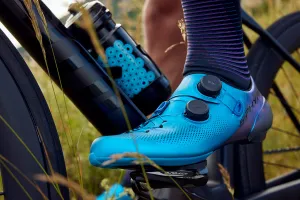
A cycling shoe that feels fine while standing in a shop can become a problem 40 kilometres into a hard ride. Hot spots, numb toes and heel lift waste energy and distract from the work in front of you. Knowing how to size cycling shoes is less about finding a number on a box and more about matching your foot shape, riding discipline and closure system to the demands of your ride.


For road training, gravel events, mountain bike laps or a winter block on the trainer, the goal is the same: secure foot retention without pressure. A properly fitted cycling shoe turns your foot into a stable platform over the pedal, helping you apply power cleanly while keeping comfort intact for hours.

Ski Waxing for Faster Nordic Ski Days in OttawaSki Waxing for Faster Nordic Ski Days in Ottawa
Ski Waxing for Faster Nordic Ski Days in Ottawa

A bluebird morning at Gatineau Park can start at -15 C, warm quickly in the sun, and leave the trail feeling completely different by noon. That is why ski waxing is not just a race-day ritual. It is the small piece of preparation that determines whether your skis feel free and fast, or slow enough to turn a great training session into a grind.


For Canadian Nordic skiers, waxing is about matching your ski base to the snow in front of you. Get it right and your skis carry speed, track cleanly, and preserve energy over long kilometres. Get it wrong and even excellent skis can feel like they are dragging a snowplow.

<p>Carbon Wheel Durability for Canadian Riding</p><p>Carbon Wheel Durability for Canadian Riding</p>

Carbon Wheel Durability for Canadian Riding

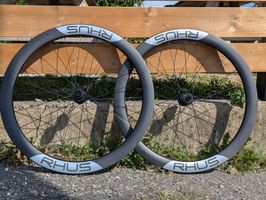
A sharp-edged pothole after a thaw, a square hit on a rocky descent, or a long wet brake down a Gatineau grade will test carbon wheel durability far more honestly than a product weight claim. Modern carbon wheels are exceptionally strong for their mass, but they are engineered systems, not indestructible race props. The right wheel, tire pressure, build quality and maintenance routine make the difference between years of fast riding and an expensive interruption to your season.


For road, gravel, mountain and cyclocross riders, carbon rims can be a dependable long-term upgrade. They hold their shape well, resist corrosion, and allow designers to tune stiffness, aerodynamics and impact resistance with remarkable precision. The trade-off is that damage is not always obvious, and a carbon rim requires a more disciplined inspection after a meaningful hit.