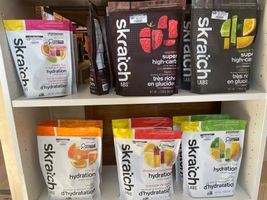
Skratch Hydration Review: The Short Verdict
Skratch Hydration Sport Drink Mix is a strong choice for athletes who struggle to drink enough during long efforts or who are tired of overly sweet, syrupy sports drinks. It has a light flavour profile, mixes easily and delivers meaningful sodium and carbohydrate without turning every bottle into a meal.
The trade-off is equally clear. Athletes with very salty sweat, those training in high heat, or racers who need to carry most of their calories in bottles may find the standard mix too moderate on its own. In those situations, it works best as one part of a broader fueling plan alongside gels, chews, solid food or a higher-sodium option.
For the rider doing a two-hour summer loop, the runner heading out for a long progression run, or the skier spending a cold day logging volume, Skratch is easy to use consistently. Consistency matters. A product that sits well and tastes good late in a session is more useful than a theoretically perfect formula left half-finished in the bottle cage.
What Is in Skratch Hydration?
The standard Skratch Sport Drink Mix combines carbohydrates for energy with electrolytes, particularly sodium, to support fluid replacement. Exact nutrition details vary by flavour and product format, so check the label on the bag or single-serve packet you are using. The important practical point is that it is formulated as a hydration drink with fuel included, not as a high-calorie bottle mix or a pure electrolyte tablet.
A typical serving mixed as directed provides a modest amount of carbohydrate and a meaningful but not extreme sodium dose. That profile makes sense for steady endurance work. You get energy coming in gradually while maintaining a drink concentration that most athletes can tolerate when breathing hard or working in warm conditions.
The ingredient approach also explains the taste. Skratch uses real fruit-based flavouring in many options and avoids the heavy artificial aftertaste that can make some drinks hard to tolerate by the final hour. That does not mean every flavour will suit every athlete. Taste is personal, and a citrus flavour that feels refreshing on the bike may feel too sharp during a winter run. Still, the overall profile is deliberately restrained.
Drinkability is the Main Performance Feature
Hydration products are often judged by sodium numbers alone. Sodium matters, but athletes do not absorb what they do not drink. The most convincing argument for Skratch is that it remains palatable under load.
On long rides, many athletes find they can sip Skratch regularly without flavour fatigue. That is especially valuable when plain water feels insufficient but a very sweet mix feels like a chore. For runners, the lighter mouthfeel can be welcome when gels and concentrated carbohydrates are already part of the plan.
There is a practical advantage for cyclists as well: it rinses from bottles more easily than dense carbohydrate mixes. Anyone who has opened a neglected bottle after a hot week knows this is not a trivial detail.
Sodium: Enough for Some, Not for Everyone
Sodium needs are individual. Sweat rate, sweat sodium concentration, intensity, temperature, clothing, acclimation and duration all affect what you need. A cool two-hour cross-country ski may demand a very different strategy from a four-hour ride in 30 C heat.
For average conditions, Skratch Sport Drink Mix offers a sensible baseline. It can cover a substantial portion of electrolyte needs for athletes who are drinking to thirst and eating normally around training. It is also a good fit for people who have had gastrointestinal trouble with very high-sodium, high-carbohydrate bottles.
But heavy sweaters should avoid assuming one scoop solves the problem. White salt marks on clothing, repeated cramping in hot events, headaches after long training days and unusually large body-mass losses can all be prompts to assess hydration more carefully. Those signs do not automatically mean sodium is the culprit, but they are worth discussing with a qualified sports nutrition professional.
For a long race, many athletes will use Skratch in one bottle and add electrolytes or sodium from another source. That could mean a salt capsule, a higher-sodium drink mix or sodium included in their gels and race food. The right approach depends on the full plan, not one product in isolation.
Fueling Flexibility for Cycling, Running and Skiing
Skratch is particularly useful when you want bottles to contribute energy without forcing them to carry your entire hourly carbohydrate target. This gives you flexibility to adjust fueling as conditions change.
A cyclist on a three-hour road ride might use Skratch in both bottles, then add a bar early and gels later when pace rises. A trail runner may prefer a lighter drink in a soft flask, using portable food at aid stations or in a vest. For Nordic skiers, the moderate sweetness is appealing because cold weather can reduce thirst, while bulky winter layers and gloves make frequent eating less convenient.
This flexibility is an advantage, but it asks you to do some planning. If your event target is 60, 75 or more grams of carbohydrate per hour, calculate what is coming from each bottle and what must come from food. Do not rely on feel alone late in a race, when fatigue tends to make nutrition decisions less precise.
The Bottom Line for Canadian Athletes
Skratch earns its reputation because it handles the unglamorous part of endurance nutrition well: making it easier to keep drinking. The flavour is light, the carbohydrate level is practical and the moderate electrolyte profile works for a broad range of everyday training conditions.
Treat it as a dependable foundation, not a one-size-fits-all prescription. Test it at your expected race concentration, note how much you drink in different temperatures and build the rest of your fueling around the demands of your event.