FREE SHIPPING ON ORDERS $100 +

Euro-Sports | Oct 5

How to Set Tire Pressure for Faster Bike Rides

A 28 mm road tire at 95 psi can feel quick on a perfectly smooth road and punishingly slow on Ottawa pavement. The same applies off-road: a gravel tire inflated for hardpack can skip across loose corners, while a mountain bike tire set too soft can fold under load. Learning how to set tire pressure is one of the fastest, least expensive ways to improve comfort, control and rolling speed.


The target is not the highest pressure your tyre allows. It is the lowest pressure that gives dependable support, avoids rim strikes or tire squirm, and suits the surface you are actually riding. That sweet spot changes with rider weight, bike weight, tire volume, casing, terrain and conditions.

Why lower pressure is not always slower


On glass-smooth indoor velodrome surfaces, higher pressure can reduce tire deformation and roll efficiently. Canadian roads, rail trails and singletrack are another story. A tyre that is too hard bounces over roughness rather than tracking through it. That vibration costs energy, reduces grip and leaves you more fatigued by the end of a long ride.


Lowering pressure lets the tire conform to the surface. The contact patch becomes wider, traction improves and the bike stays calmer over broken pavement, roots and gravel. Go too low, however, and the tyre can bottom out against the rim, burp air from a tubeless setup, feel vague in corners or suffer a pinch flat with an inner tube.


Pressure is therefore a balance between speed, protection and handling. The right setting for a 60-minute criterium on smooth tarmac may be completely wrong for a four-hour mixed-surface ride through the Gatineau.


How to set tire pressure: start with the essentials


Begin with the information printed on the tire sidewall: its size and the manufacturer’s approved minimum and maximum pressure. The maximum is a safety ceiling, not a recommended starting point. Also check the maximum pressure stated by the rim manufacturer, especially with hookless road wheels, where limits can be lower.


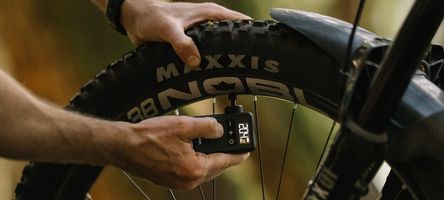
Use a reliable floor pump with a gauge, or better yet, compare your pump gauge with a known accurate digital gauge. Small differences matter more as tire volume decreases. An error of 5 psi is significant on a 28 mm road tire; it is less dramatic on a 2.4 inch mountain bike tire, but still enough to change cornering feel.


Set the rear tire slightly firmer than the front. More of your body weight sits over the rear wheel, usually around 55 to 60 percent on a road or gravel bike. A useful starting point is to add roughly 5 to 10 percent more pressure at the rear, then refine from there.


Choose a sensible starting pressure


There is no universal psi number, but these broad starting ranges work for an average-sized rider and bike. Treat them as a first ride setting, not a final prescription.


Heavier riders generally need more pressure, while lighter riders can run less. As a rough adjustment, change both tires by 2 to 3 psi on a road bike or 1 to 2 psi on gravel and mountain bikes before making another test ride. Do not make massive changes all at once, or you will struggle to identify what improved the ride.


Tire width matters just as much as rider weight. A larger air volume supports the same load at lower pressure. If you move from 28 mm to 32 mm road tires, expect to reduce pressure noticeably. Modern wide rims can also make a tire measure wider than its label, another reason pressure charts are starting points rather than rules.


Account for tubes, tubeless and inserts


Tubeless tires can usually run lower pressure than tubes because there is no inner tube to pinch between the rim and tire during an impact. That is particularly useful on gravel and mountain bikes, where grip and rim protection are priorities. Tubeless is not a free pass to run extremely low pressures, though. Too little air can cause a tyre to burp at the bead during a hard corner.


With inner tubes, keep enough pressure to prevent pinch flats. If you regularly find the classic two-hole snakebite puncture after potholes or rocks, add a little air, inspect the rim tape and consider a larger-volume tire if your frame allows it.


Tire inserts add support and rim protection, especially for aggressive trail and enduro riding. They may let you reduce pressure slightly, but the result depends on the insert, tire casing and your riding style. Test methodically. An insert that improves stability in turns may allow a lower setting, while a very supportive casing may already provide the control you need.


Let terrain and conditions make the final call


For smooth summer pavement, ride near the upper end of your tested range. For cracked roads, chipseal and long endurance days, lower pressure often feels faster and is easier on your hands, back and shoulders. If the bike starts to feel harsh and chatters over every imperfection, it is usually overinflated.


Gravel pressure depends heavily on surface. Firm packed gravel can take a few more psi than loose stone, washboard or rooty doubletrack. Lower pressure improves grip and reduces deflection on rough terrain, but add air before a route with sharp rocks, repeated square-edge hits or heavy bikepacking loads.


Mountain bikers should judge pressure by corner support as well as impact resistance. If the tire folds or feels delayed when you load it into a berm, add 1 psi. If your hands are taking a beating and the bike ricochets off roots, take 1 psi out. Front pressure is especially influential for confidence on wet roots, off-camber rocks and loose-over-hard corners.


Temperature also changes pressure. A tyre inflated in a warm workshop can lose several psi during a cold February fat-bike outing. Conversely, a bike left in direct summer sun or transported in a hot vehicle can gain pressure. Check before every important ride, not just at the start of the season.


Test pressure with a repeatable routine


Pick a familiar loop that includes the terrain you ride most often. Start at your chosen baseline, then pay attention to three things: traction in corners, harshness over bumps and signs of bottoming out. Make one small adjustment at a time and repeat the same section.


On a road bike, listen for sharp rim impacts and notice whether the bike skips across rough pavement. On gravel, look for instability under braking and a tendency to deflect off loose rocks. On a mountain bike, use a short descent with a few corners and compressions. The right pressure should feel planted without making the tire vague.

All of our staff are active cyclists, xc-skiers, and runners - so we know how important it is to have equipment properly tailored to an athlete's specific needs.


NOTE! No appointments needed for ski wax service - just bring your skis in and we will go from there!


Most repairs are completed within 48 hours of drop-off. Give us a call at 613-422-5616 to confirm turnaround time for your specific service.

Euro-Sports

More Posts

Skin Skis Versus Waxable Skis: Which Fits You?Skin Skis Versus Waxable Skis: Which Fits You?
Skin Skis Versus Waxable Skis: Which Fits You?

A cold Ottawa morning can give you dry, transformed snow in the tracks, a glazed sunny section by the parking lot, and fresh crystals under the trees - all in one ski. That is why the skin skis versus waxable skis decision is less about finding a universally better ski and more about choosing the setup that works for your skiing, your time, and the conditions you actually face.


For many recreational classic skiers, skin skis have removed the most frustrating part of the sport: trying to get reliable kick without sacrificing glide. For racers and committed training-focused skiers, a properly waxed pair still offers a level of speed and tuneability that skins cannot fully match. Both can be excellent equipment. The difference is in the details.


Best Nordic Ski Poles for Canadian SkiersBest Nordic Ski Poles for Canadian Skiers
Best Nordic Ski Poles for Canadian Skiers

A pole that is too soft, too long, or fitted with a loose strap turns every kilometre into wasted energy. The best Nordic ski poles are not simply the lightest pair on the wall. They match your technique, height, snow conditions, and how hard you intend to ski - whether that means steady laps at Gatineau Park, a midwinter loppet, or focused skate intervals before work.


For Canadian skiers, durability matters alongside weight. Poles see hard-packed tracks, icy parking lots, cold temperatures, road crossings, and the occasional awkward fall. The right model should feel fast in the hand without becoming a piece of race equipment you are afraid to use.

Skratch Hydration Review for Canadian Endurance AthletesSkratch Hydration Review for Canadian Endurance Athletes
Skratch Hydration Review for Canadian Endurance Athletes

A bottle that still tastes acceptable three hours into a humid Gatineau gravel ride is worth more than a flashy nutrition label. This Skratch hydration review looks at what the mix does well in real training conditions: long road rides, trail runs, Nordic ski sessions, races and the awkward shoulder-season days when Ottawa weather cannot decide what it is doing.


Skratch is not designed to be the most aggressively dosed product on the shelf. Its core appeal is a drink mix built around drinkability, moderate electrolyte replacement and straightforward carbohydrate intake. For many endurance athletes, that makes it a reliable default rather than a niche race-day tool.

How to Choose Roller Skis for Better TrainingHow to Choose Roller Skis for Better Training
How to Choose Roller Skis for Better Training

A good roller ski session should feel like ski training, not like a fight with nervous equipment. The right roller skis let you build ski-specific balance, strength and timing from spring through late fall, whether you are preparing for a local loppet, a race season, or simply want to arrive at the first snowfall ready to ski.


For Canadian Nordic athletes, selection comes down to more than skate versus classic. Wheel speed, frame material, wheel diameter, binding position and braking confidence all shape how productive and enjoyable your pavement training will be. Buy for the terrain you actually have, the technique you want to improve, and the level of control you need when fatigue sets in.

Cross Country Ski Tuning Frequency ExplainedCross Country Ski Tuning Frequency Explained
Cross Country Ski Tuning Frequency Explained

A fast ski on the wrong wax can feel slow. A neglected base on the right wax can feel just as frustrating. Getting cross country ski tuning frequency right is less about following a rigid calendar and more about reading your ski bases, the snow, and the work you expect them to do. Ottawa-area skiers can see dry midwinter cold, abrasive man-made snow, fresh natural snow, and freeze-thaw conditions in the same month. Your skis need different attention in each.


For most recreational skiers, regular glide waxing and basic base care will keep equipment running well all season. Racers, high-volume trainers, and skiers using premium race bases should tune more deliberately. The goal is not to wax for the sake of waxing. It is to protect the base, preserve glide, and make every session feel closer to the ski your equipment was built to be.

How to Prepare Race Nutrition for Race DayHow to Prepare Race Nutrition for Race Day
How to Prepare Race Nutrition for Race Day

A perfect bike fit, fast skis, or fresh running shoes can only do so much if your fuel plan falls apart at 90 minutes. Knowing how to prepare race nutrition means turning your training-day habits into a simple, repeatable system that delivers carbohydrate, fluid, and sodium when your body can use them.


For Ottawa-area athletes, the variables can be especially sharp. A hot Gran Fondo, a humid summer triathlon, a cold Nordic loppet, and a muddy cyclocross race do not create the same fueling demands. The goal is not to copy the plan of the fastest person in your start corral. It is to arrive with a plan that matches your event duration, intensity, gut tolerance, weather, and access to bottles or aid stations.

Ski Base Care Guide for Faster Nordic SkisSki Base Care Guide for Faster Nordic Skis
Ski Base Care Guide for Faster Nordic Skis

A Nordic ski can have excellent camber, a well-chosen grind, and the right flex for your weight, yet still feel slow if its base is dry, dirty, or damaged. This ski base care guide focuses on the work that protects your glide zones between Ottawa freeze-thaw cycles, abrasive hardpack, road grit near trail access points, and long kilometers of training.


Base care is not about chasing perfection after every outing. It is about recognizing what the ski needs, applying the right level of maintenance, and avoiding the shortcuts that create more work later. A few deliberate habits will keep your skis faster, more predictable, and ready when fresh tracks appear.

Ski Tuning Performance Starts at the BaseSki Tuning Performance Starts at the Base
Ski Tuning Performance Starts at the Base

A ski can feel fast in the shop and stubborn on the trail 20 minutes later. That gap is usually not about fitness or an expensive new ski. It is about ski tuning performance: how well the base structure, wax selection, base condition, and ski setup match the snow beneath you.


For Ottawa-area Nordic skiers, conditions can change from dry, abrasive cold to humid transformed snow in a matter of days. A tune that works beautifully at -12 C may feel slow at -2 C, especially after fresh snow has been skied in. The right preparation gives you a ski that releases cleanly, carries speed through flats, and remains predictable when the course gets technical.

Nordic Ski Boot Guide: Find Your Best FitNordic Ski Boot Guide: Find Your Best Fit
Nordic Ski Boot Guide: Find Your Best Fit

A Nordic ski boot can make a fast ski feel vague, a perfect wax day feel uncomfortable, and a long Gatineau or Kichi Sibi outing end early. It is the point where your body meets the ski, so fit and compatibility matter as much as ski length, camber, or base structure. This Nordic ski boot guide will help you choose a boot that supports the way you actually ski - whether that means steady classic kilometers, skate intervals, loppet racing, or a mix of Ottawa winter terrain.