What custom bicycle geometry really changes
Geometry determines where the wheels sit relative to you and how the frame supports your riding position. Fit is part of that picture, but the two are not identical. A skilled fit can adjust saddle position, bar height, stem length and contact points. Geometry establishes the useful range in which those adjustments work.
If a production frame has too much stack, too little reach or a front center that does not suit your riding style, fitting parts can only compensate so far. An extreme stem may make the cockpit work on paper while compromising steering feel, weight distribution or appearance. A custom frame lets the design begin with the rider rather than asking the rider to adapt to a stock size chart.
The goal is not automatically lower, longer or more aggressive. Racers often need a stable platform for putting power down while staying aerodynamic. A committed recreational rider may gain more speed from a sustainable position than from a low front end that overloads their hands after 90 minutes. The fastest geometry is the one you can hold when it matters.
Start with the rider and the ride
A useful geometry discussion starts well before anyone chooses a head angle or tube length. Your fitter and frame builder need a clear riding brief: how many hours you typically spend in the saddle, your flexibility and injury history, your preferred surfaces, the events on your calendar and what you dislike about your current bike.
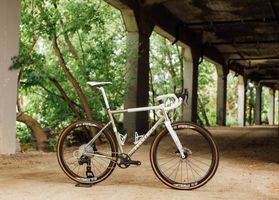
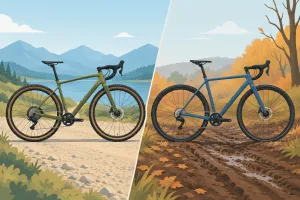
A rider preparing for road fondos and fast group rides may want a responsive chassis with enough tire clearance for imperfect spring pavement. A gravel racer could prioritize a long, composed front end, clearance for larger tires and room for a frame bag. A cyclocross rider might accept quicker handling and a more active riding position because rapid accelerations and repeated dismounts are part of the job.
Your current bike is valuable evidence, especially if you can explain what works and what does not. Numb hands, an unstable front wheel on climbs, toe overlap, recurring back tension or a bike that feels reluctant in tight corners all point toward questions worth investigating. They do not automatically identify a single geometry fix. Cleat placement, saddle choice, tire pressure, bar shape and riding technique can also influence comfort and control.
Position comes before tube lengths
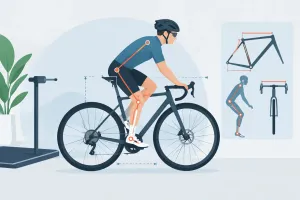
A custom build usually begins with contact points: saddle height and setback, pedal position, handlebar reach, bar drop and the relationship between saddle and handlebar. Those measurements help establish the stack and reach the frame needs to provide.
Stack describes the vertical relationship from the bottom bracket to the top of the head tube. Reach describes the horizontal relationship. Together, they are more informative than a traditional seat-tube measurement because they show how tall and how long the front of the bike really is. Two frames labelled 56 cm can have dramatically different stack and reach figures.
From there, the builder can choose a head-tube length, top-tube configuration and stem range that delivers the position without relying on a tower of spacers or an unusually long stem. That gives you adjustment room for seasonal changes, different bars or a future change in flexibility, while preserving balanced handling.
The geometry numbers that shape the ride
Not every number deserves equal attention, but several measurements work together to define how a bike feels.
Head angle and fork trail influence steering character. A steeper head angle can feel quick and direct, which suits some road and cyclocross applications. A slacker angle generally adds stability at speed and on rough terrain. Trail is affected by both head angle and fork offset, so judging one figure in isolation can be misleading. The objective is predictable steering, not simply a number that looks aggressive.
Wheelbase and front center affect stability and weight distribution. A longer wheelbase can calm a bike on rough gravel, high-speed descents or loaded rides. A shorter wheelbase can feel more lively in tight corners. Front center, the distance from the bottom bracket to the front axle, matters particularly for taller riders, steep climbing and larger tires. It can reduce toe overlap and help keep the rider centered between the wheels.
Chainstay length is another trade-off. Short chainstays can produce a responsive, compact feel and make it easier to lift the front wheel. Longer stays can improve rear-tyre clearance, loaded stability and climbing traction. For a gravel or mountain build, the ability to run the intended tyre size without compromising mud clearance is often more useful than chasing the shortest possible rear end.
Seat angle shapes pedaling position. A steeper effective seat angle brings the hips forward relative to the bottom bracket and can support an efficient position for sustained power, especially when riders use lower front ends. A slacker angle can suit different riding positions and frame layouts. Because saddle rails offer only limited adjustment, this decision should match the rider's actual saddle setback rather than force it.
Bottom-bracket height or drop affects both cornering feel and pedal clearance. A lower bottom bracket can make a road or gravel bike feel planted through turns. It also raises the risk of pedal strikes on rutted trails, off-camber cyclocross courses or technical mountain terrain. Here, local trails and intended crank length matter as much as pure geometry theory.
Material and frame design are part of the equation
The same geometry can feel different across carbon, steel and titanium because material selection, tube profiles and layup or tubing choices influence stiffness, feedback and weight. A Toray T1000 carbon road frame can be tuned for fast acceleration and aero efficiency, while 3AL/2.5V titanium may appeal to riders seeking long-distance comfort, durability and a distinctive ride.