FREE SHIPPING ON ORDERS $100 +

Euro-Sports | Sep 15

Skate Roller Skis for Beginners Start Right

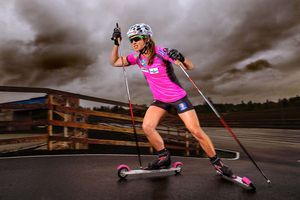
A smooth stretch of pavement can turn summer training into the closest thing to skating on snow - but skate roller skis for beginners demand more respect than most first-time skiers expect. They roll quickly, do not stop on command, and punish rushed technique. Start with stable equipment, a quiet low-traffic route, and a few focused skills, and roller skiing becomes one of the best ways to build fitness and ski-specific confidence before winter.

Why Start With Skate Roller Skis?


Skate roller skiing trains the movements that matter in skate skiing: balance over one ski, lateral push, weight transfer, poling timing, and a forward athletic position. For Canadian Nordic skiers, it also makes the long gap between spring melt and first snow much more productive.


It is not identical to snow. Pavement offers more consistent grip, rollers have a fixed track, and falls are less forgiving. Still, a well-chosen setup gives a beginner immediate feedback. If you are standing too tall, pushing behind your body, or shuffling rather than gliding, you will feel it right away.


The main trade-off is accessibility versus speed. Skate roller skis are usually faster and more dynamic than classic models, but their technique has a steeper first-session learning curve. If your priority is simply rebuilding ski fitness after years away, classic roller skis may feel less intimidating. If you want to improve skate skiing specifically, start with skate equipment and give yourself time to learn it properly.


Choosing Skate Roller Skis for Beginners


Do not buy the shortest, lightest, fastest roller ski because it looks race-ready. A beginner benefits most from a predictable platform, not a nervous one. The right ski lets you focus on posture and balance instead of fighting every pavement seam.


Frame length and stability

A longer wheelbase generally feels more stable, especially when you are learning to glide on one leg. It tracks more calmly over rough pavement and makes it easier to recover from a small balance error. Shorter roller skis can feel agile and closer to high-performance snow skis, but they are less forgiving at low speed and on uneven surfaces.


Aluminum frames are common, durable, and direct underfoot. Composite frames can absorb more vibration and may offer a smoother feel on Ottawa-area pavement, but frame material matters less than fit, wheel speed, and your ability to control the ski. Choose proven construction from a dedicated Nordic brand rather than a bargain setup with unknown wheels or hardware.


Wheel speed matters more than beginners think


Roller-ski wheels are available in different rolling resistances. Faster wheels can feel exciting on flat, fresh pavement, but they reduce the margin for error and make descents much harder to manage. For a first setup, standard or slower-training wheels are usually the smart choice.


Slower wheels create more resistance, which better resembles skiing and helps control pace. They are particularly useful for athletes learning on multi-use paths where stops, corners, and changing surfaces are unavoidable. Faster wheels suit experienced skiers training on known routes, not someone still learning how to step around a bollard.


Wheel size is also a compromise. Larger wheels roll more smoothly over cracks and coarse pavement. Smaller wheels lower the platform slightly and can feel stable, but they transmit more road vibration. There is no single perfect specification, so match the setup to the pavement you actually have access to.


Boots, bindings, and poles


Use skate-specific Nordic boots with firm ankle support and a secure heel. A boot that is too roomy makes edge control vague and turns a manageable balance exercise into a frustrating one. Your bindings must match your boot sole standard and be mounted squarely. This is not a component combination to guess at.


Poles need roller-ski tips, not snow baskets. Dedicated carbide tips bite into pavement, while baskets are ineffective and can slip unexpectedly. Pole length is commonly around chin to lip height for skate skiing, depending on technique and body proportions. A slightly conservative pole length is often easier for beginners to manage than poles that encourage reaching too far forward.


At Euro-Sports, our Nordic team can help match roller skis, boots, bindings, and poles as one system. A proper setup is faster to progress on and far safer than adapting mismatched gear from a basement ski bag.


Protective Gear Is Part of the Setup


A cycling or multisport helmet is non-negotiable. Roller skis move fast enough for a hard impact, and pavement does not offer the forgiving landing of packed snow. Wear gloves every time. They protect your hands in a fall and reduce abrasion from pole straps and grips.


Knee pads and elbow pads are strongly worth considering for the first several sessions, particularly if you are learning skating balance or practising on a narrow path. Bright clothing and rear visibility lights are sensible whenever there is any possibility of interaction with cyclists or vehicles. Save headphones for the gym. You need to hear traffic, bikes approaching from behind, and the surface changing under your wheels.


Your First Session Should Be Deliberately Boring


The best first route is a wide, flat, clean piece of pavement with almost no traffic: an empty parking lot after business hours, a quiet paved path with long sightlines, or a closed loop where you can repeat the same section. Avoid hills, wet pavement, loose gravel, painted lines, construction debris, and busy mixed-use paths.


Before adding poles, spend 10 to 15 minutes getting comfortable rolling and stopping. Stand with knees and ankles softly flexed, hips over your feet, chest tall, and hands in front of your body. Roll in a shallow V stance. Let one ski glide for a second, then step gently to the other. Think of moving your body over the ski, not pushing the ski away from your body.


Learn to stop before you train. On flat ground, the most reliable beginner option is to roll onto grass or a gentle uphill section with plenty of room. You can also use controlled step turns to scrub speed, but do not wait until you are already moving too fast to try them. There is no universal roller-ski brake technique that works safely at speed, which is why route choice is a real training decision.

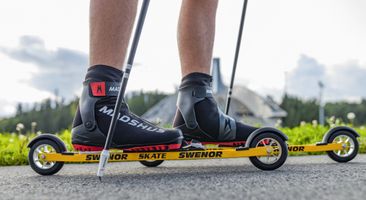
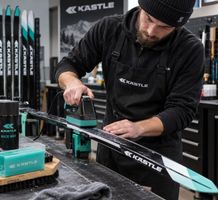
All of our staff are active cyclists, xc-skiers, and runners - so we know how important it is to have equipment properly tailored to an athlete's specific needs.


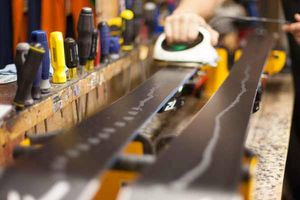
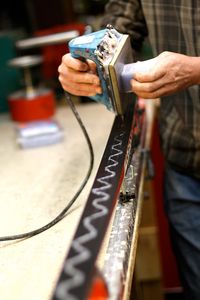
NOTE! No appointments needed for ski wax service - just bring your skis in and we will go from there!


Most repairs are completed within 48 hours of drop-off. Give us a call at 613-422-5616 to confirm turnaround time for your specific service.

Euro-Sports

More Posts

How to Choose Roller Skis for Better TrainingHow to Choose Roller Skis for Better Training
How to Choose Roller Skis for Better Training

A good roller ski session should feel like ski training, not like a fight with nervous equipment. The right roller skis let you build ski-specific balance, strength and timing from spring through late fall, whether you are preparing for a local loppet, a race season, or simply want to arrive at the first snowfall ready to ski.


For Canadian Nordic athletes, selection comes down to more than skate versus classic. Wheel speed, frame material, wheel diameter, binding position and braking confidence all shape how productive and enjoyable your pavement training will be. Buy for the terrain you actually have, the technique you want to improve, and the level of control you need when fatigue sets in.

Cross Country Ski Tuning Frequency ExplainedCross Country Ski Tuning Frequency Explained
Cross Country Ski Tuning Frequency Explained

A fast ski on the wrong wax can feel slow. A neglected base on the right wax can feel just as frustrating. Getting cross country ski tuning frequency right is less about following a rigid calendar and more about reading your ski bases, the snow, and the work you expect them to do. Ottawa-area skiers can see dry midwinter cold, abrasive man-made snow, fresh natural snow, and freeze-thaw conditions in the same month. Your skis need different attention in each.


For most recreational skiers, regular glide waxing and basic base care will keep equipment running well all season. Racers, high-volume trainers, and skiers using premium race bases should tune more deliberately. The goal is not to wax for the sake of waxing. It is to protect the base, preserve glide, and make every session feel closer to the ski your equipment was built to be.

How to Prepare Race Nutrition for Race DayHow to Prepare Race Nutrition for Race Day
How to Prepare Race Nutrition for Race Day

A perfect bike fit, fast skis, or fresh running shoes can only do so much if your fuel plan falls apart at 90 minutes. Knowing how to prepare race nutrition means turning your training-day habits into a simple, repeatable system that delivers carbohydrate, fluid, and sodium when your body can use them.


For Ottawa-area athletes, the variables can be especially sharp. A hot Gran Fondo, a humid summer triathlon, a cold Nordic loppet, and a muddy cyclocross race do not create the same fueling demands. The goal is not to copy the plan of the fastest person in your start corral. It is to arrive with a plan that matches your event duration, intensity, gut tolerance, weather, and access to bottles or aid stations.

Ski Base Care Guide for Faster Nordic SkisSki Base Care Guide for Faster Nordic Skis
Ski Base Care Guide for Faster Nordic Skis

A Nordic ski can have excellent camber, a well-chosen grind, and the right flex for your weight, yet still feel slow if its base is dry, dirty, or damaged. This ski base care guide focuses on the work that protects your glide zones between Ottawa freeze-thaw cycles, abrasive hardpack, road grit near trail access points, and long kilometers of training.


Base care is not about chasing perfection after every outing. It is about recognizing what the ski needs, applying the right level of maintenance, and avoiding the shortcuts that create more work later. A few deliberate habits will keep your skis faster, more predictable, and ready when fresh tracks appear.

Ski Tuning Performance Starts at the BaseSki Tuning Performance Starts at the Base
Ski Tuning Performance Starts at the Base

A ski can feel fast in the shop and stubborn on the trail 20 minutes later. That gap is usually not about fitness or an expensive new ski. It is about ski tuning performance: how well the base structure, wax selection, base condition, and ski setup match the snow beneath you.


For Ottawa-area Nordic skiers, conditions can change from dry, abrasive cold to humid transformed snow in a matter of days. A tune that works beautifully at -12 C may feel slow at -2 C, especially after fresh snow has been skied in. The right preparation gives you a ski that releases cleanly, carries speed through flats, and remains predictable when the course gets technical.

Nordic Ski Boot Guide: Find Your Best FitNordic Ski Boot Guide: Find Your Best Fit
Nordic Ski Boot Guide: Find Your Best Fit

A Nordic ski boot can make a fast ski feel vague, a perfect wax day feel uncomfortable, and a long Gatineau or Kichi Sibi outing end early. It is the point where your body meets the ski, so fit and compatibility matter as much as ski length, camber, or base structure. This Nordic ski boot guide will help you choose a boot that supports the way you actually ski - whether that means steady classic kilometers, skate intervals, loppet racing, or a mix of Ottawa winter terrain.

Is a Titanium Road Bike Worth It for Canadian Riders?Is a Titanium Road Bike Worth It for Canadian Riders?
Is a Titanium Road Bike Worth It for Canadian Riders?

A rough patch of pavement on the Ottawa River Parkway can tell you more about a frame material than a showroom test ride. A titanium road bike has a distinctive way of taking the edge off broken asphalt while still feeling direct when you stand on the pedals. For riders putting in long training blocks, chasing fondos, commuting through shoulder seasons, or building one road bike to keep for decades, that balance is the point.


Titanium is not automatically the fastest choice, the lightest choice, or the least expensive choice. What it offers is a rare combination of fatigue resistance, ride quality, corrosion resistance, and custom-build potential. If those qualities match how and where you ride, it can be one of the most satisfying investments in cycling.

Classic Versus Skate Skiing for Ottawa SkiersClassic Versus Skate Skiing for Ottawa Skiers
Classic Versus Skate Skiing for Ottawa Skiers

The first few meters usually settle the classic versus skate skiing question. Step into a groomed classic track, settle your weight over one ski, and the movement can feel familiar almost immediately. Push out onto a wide, firm skate lane, however, and the sport becomes more dynamic: balance, edge grip, timing, and a stronger aerobic engine all matter at once.


For Ottawa-area skiers, both techniques make sense. We have reliable Nordic communities, great trail networks, cold spells that reward good wax choices, and variable freeze-thaw conditions that can expose a poor ski setup quickly. The right choice is less about which style is "better" and more about where you ski, what kind of workout you want, and how much time you can give to learning the movement.

Custom Bicycle Geometry Guide for Better FitCustom Bicycle Geometry Guide for Better Fit
Custom Bicycle Geometry Guide for Better Fit

A frame can be beautifully built, fitted with premium wheels and perfectly tuned shifting, yet still feel wrong from the first hard climb. That is where a custom bicycle geometry guide earns its place. Custom geometry is not about making every measurement different for the sake of it. It is about building a bike around the way you move, the terrain you ride, the events you target and the handling you expect when the pace rises.


For Canadian riders, that may mean a fast road position that remains comfortable through a long Gatineau loop, a gravel bike stable enough for washboard roads and loaded overnighters, or a mountain bike that keeps you centered on steep, technical descents. The right numbers create a bike you can ride harder, longer and with more confidence.