What Makes Road Running Shoes for Racing Different?
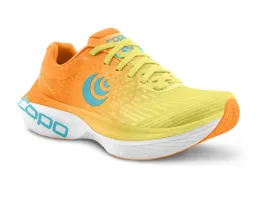
A daily trainer is designed to absorb a lot of easy kilometers. It usually has a tougher outsole, a more forgiving upper, and enough structure to remain comfortable across many types of runs. A racing shoe has a narrower job: make goal pace feel more economical while keeping weight and distraction low.
That purpose usually shows up in three areas. First is midsole foam. Modern superfoams are lighter and more resilient than traditional EVA, so they can compress under load and return energy more effectively. Second is geometry. A pronounced rocker helps move a runner from landing to toe-off, particularly at steady tempo, half-marathon, and marathon paces. Third is a plate or rod system, commonly carbon fiber, which adds longitudinal stiffness and works with the foam and rocker rather than providing speed by itself.
The trade-off is that race shoes can feel less natural at slow paces, less stable on uneven pavement, and less durable than a dependable trainer. A plated model can be exceptional on a flat, fast course but tiring if it fights your natural stride. Treat it as a performance tool, not a universal solution.
Start With Your Race Distance and Goal Pace
Distance should guide your shortlist. For a 5K or 10K, many runners prefer a lower stack height, firmer response, and a close-to-the-ground sensation that makes quick cadence changes feel immediate. Others still thrive in high-stack plated models, especially if they are chasing a road personal best and enjoy a rolling transition.
For the half marathon, the priority shifts toward sustained efficiency. You need a shoe that feels lively without becoming unstable once your calves and feet are working hard. A moderate-to-high stack platform with a secure heel and midfoot often makes sense here. If your goal is to race hard for 60 to 120 minutes, comfort is performance.
Marathon runners should be especially careful about choosing by feel alone. A shoe that feels explosive for 800 meters around the shop may be too narrow, too firm, or too demanding after 30 kilometers. Look for efficient foam, enough cushioning to protect your legs late in the race, and a fit that remains comfortable as feet swell. Practice fuelling and at least one substantial goal-pace session in the shoe before race day.
Your pace matters too.. Aggressive geometries tend to work best when a runner loads the shoe with purpose. If you are building toward a first race or running at a more controlled pace, a lightweight performance trainer can be the smarter choice. It may weigh a little more, but a stable, familiar ride often produces a better result than a super shoe that feels awkward.
Fit Is the First Performance Feature
No midsole technology can rescue a poor fit. Your race shoe should hold the heel securely, lock the midfoot without pressure, and leave enough length and toe-box volume for natural swelling. A thumb-width of space in front of the longest toe remains a useful starting point, but foot shape matters more than a single rule.
Try shoes later in the day if possible, when your feet are closer to their post-run size. Wear the socks you will race in. Run a few strides, not just a few steps. Pay attention to heel lift, pressure across the top of the foot, rubbing around the arch, and whether your toes feel crowded on toe-off.
A narrower racing upper can provide excellent control around corners, but it is not always the best option for wide forefeet or runners with prominent bunions. Likewise, a soft, minimal upper can disappear beautifully on foot while offering little support if you tend to roll off the platform. There is no prize for tolerating a fit issue during a fitting. Small discomfort becomes a major problem over 10K, and an even bigger one over 42.2K.
Plates, Foam, and Stack Height: Read the Whole System
Carbon plates get the headlines, yet the shoe is a system. The foam determines much of the cushioning and rebound. The plate influences stiffness and lever action. The rocker shape affects how easily you move forward. Stack height changes both protection and stability.
A high-stack, carbon-plated shoe can reduce the muscular cost of holding pace for many runners. It can also feel tippy on cambered roads, sharp turns, or rough pavement. Runners who prefer a planted landing may do better in a lower or wider platform, even if the published weight is slightly higher.
Not every fast shoe uses carbon. Nylon plates, composite plates, and responsive unplated foams can offer a more flexible feel that suits shorter events, faster runners who dislike rigid shoes, or athletes who want one shoe for workouts and races. The right question is not, “Does it have a plate?” It is, “Can I run my race rhythm efficiently in it?”
Heel-to-toe drop deserves the same practical thinking. A lower-drop shoe may feel smooth for runners accustomed to loading their calves and ankles, while a higher drop can take pressure off the Achilles for others. Do not make a dramatic change immediately before a goal event. Your lower legs need time to adapt.
Match the Shoe to Canadian Road Conditions
Spring racing in Ontario can mean cold pavement, rain, sand left near curbs, potholes, and temperature swings between warm-up and the finish. Outsole coverage and grip matter. A featherweight race shoe with very little rubber may be perfect for dry, clean roads but less reassuring on wet painted lines or slick corners.
Check that the outsole reaches the parts of the shoe you actually wear down. Heel strikers need meaningful rearfoot rubber. Forefoot strikers should inspect coverage under the first metatarsal and toe-off area. Race shoes do not need to last as long as daily trainers, but they should deliver reliable traction through your target event and key workouts.