Start With Your Skiing Style
The first question is not which brand looks best. It is whether you ski classic, skate, or both. Classic and skate boots are built for different movements, and choosing the wrong category creates compromises you will feel immediately.
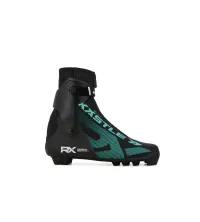
Classic skiing needs a natural forefoot flex. As you stride and kick, the boot must let your foot roll forward while holding your heel securely. A good classic boot feels flexible through the toe, stable around the heel, and warm enough for slower-paced days. Recreational classic boots often use more insulation and a softer upper. Race-oriented models reduce bulk and weight, use a closer fit, and prioritize efficient power transfer.
Skate skiing asks much more from the cuff and sole. Every push sends force laterally through the boot, so a skate model uses a stiff sole, firm heel counter, and ankle cuff to control the ski edge. That support keeps your knee tracking cleanly over the ski and makes high-cadence skating more precise. A soft classic boot on skate skis can feel unstable, especially on hardpack, off-camber terrain, and fast descents.
Combi boots sit between the two. They typically have a flexible-enough forefoot for classic technique plus a supportive cuff for occasional skating. They are a sensible choice for a skier with one ski setup who tours casually in both techniques. They are less compelling for athletes focused on improving either discipline: the cuff can restrict classic stride, while the softer sole and lower support limit skate efficiency. One boot can do both jobs, but it rarely does either as well as a purpose-built model.
Nordic Ski Boot Guide: Fit Before Features
A boot should feel secure from the first try-on. Do not buy a size larger simply because Canadian winters are cold. Excess space lets the heel lift, reduces ski control, and creates friction that can lead to blisters. It also makes the boot harder to keep warm because your foot is working to stabilize inside it.
Start with the socks you normally ski in. A thin or medium-weight technical Nordic sock is usually right. Thick hiking socks can distort the fit test and make a properly fitted performance boot seem too small. Your toes should be able to lie flat without curling or pressing hard against the front, but there should not be enough room to slide forward on a descent.
Pay particular attention to three areas: heel hold, forefoot width, and instep pressure. Lock the heel into the pocket, flex forward as if striding, then shift side to side as if skating. Your heel should stay planted. A small amount of contact at the toe when standing upright can be acceptable if it disappears when you flex, but persistent toe pressure is not.
Width is where trying on multiple brands pays off. Nordic boots are not interchangeable in shape. Some suit a narrow, low-volume foot; others offer a more generous toe box or higher instep. A wider boot is not automatically warmer or more comfortable if it lets your foot move around. Conversely, a narrow race last can be an excellent fit for a narrow foot but miserable for someone who needs forefoot room.
For performance skiers, the fit should be close without numbness. For recreational skiers who spend more time touring at moderate pace, a little more volume can be welcome, particularly if you run cold. The right answer depends on your circulation, intended session length, and how hard you ski.
Test Fit Like You Are Skiing
Walk around the shop for several minutes with both boots fully laced. Mimic a forward classic stride and a lateral skate push. If possible, stand with your knees bent and weight on one foot. Pressure points tend to reveal themselves once the boot is loaded, not while you are sitting down.
Do not expect a boot to stretch dramatically. The liner may pack out slightly with use, and lacing adjustment can improve hold, but a boot that pinches your forefoot or lifts at the heel in the shop is unlikely to become a favourite by February. A supportive footbed can improve heel stability and distribute pressure for some skiers, especially those with high arches or feet that fatigue on long outings.
Match the Boot to Your Binding
Boot and binding standards must match. Most current Nordic equipment uses the NNN-compatible system, which includes bindings marketed under NNN, Turnamic, and Prolink names. These systems generally share the same boot sole interface, allowing broad compatibility between current boots and bindings.
Older SNS boots and bindings are a separate system. An SNS boot does not fit an NNN-style binding, and an NNN-compatible boot does not fit an SNS binding. If you are updating older skis, check the binding before buying boots. A new boot can be the ideal opportunity to move to a current standard, but that may also require a binding change.
Within compatible systems, boot category still matters. A skate boot can click into a compatible classic binding, but the setup will not create proper classic flex or feel. Likewise, a classic boot in a skate binding will not supply the lateral stability needed for confident skating. Match the full system to the technique.
Choose Flex, Support, and Warmth for Ottawa Conditions
Boot stiffness should reflect both your technique and your goals. Softer classic boots are comfortable and forgiving for relaxed touring. Stiffer classic boots sharpen connection to the ski and make powerful kick-and-glide more efficient. On skate boots, a taller and firmer cuff provides more edge control, but it can feel restrictive to skiers who prefer a freer ankle motion.
At Euro-Sports, our team skis the same variable Ottawa conditions you do. Bring in your current boots or skis if you are unsure about sizing, technique, or binding compatibility. The best boot is the one you stop thinking about after the first kilometer - leaving you free to focus on a clean stride, a strong push, and the next good stretch of snow.