FREE SHIPPING ON ORDERS $100 +

Euro-Sports | 4 hours ago

Gravel Versus Cyclocross Bikes Compared

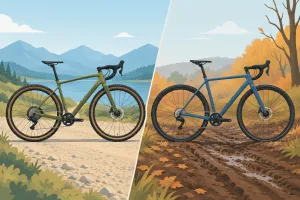
A fast drop-bar bike with room for wider tires can look like either choice from across the parking lot. That is why the gravel versus cyclocross bikes question causes so much uncertainty for riders shopping for one capable machine. The overlap is real, but the priorities are different: one is built to stay composed for hours over changing surfaces; the other is built to attack a hard, technical race for about an hour.


For Ottawa riders, that distinction matters. A Saturday on the Prescott-Russell Trail, the rail trail toward Carleton Place, or a long backroad route in the Gatineau can involve washboard gravel, pavement, mud, sand, and plenty of distance. A cyclocross course can pack off-cambers, barriers, steep run-ups, grass, ruts, and repeated accelerations into a compact circuit. Pick the bike for the riding you actually do most often, not just the event that sounds exciting in January.

Gravel versus cyclocross bikes: the core difference


A gravel bike is designed around stability, comfort, tire volume, and versatility. It should feel predictable when the route gets rough, when the ride runs long, or when you are carrying food, tools, and an extra layer. Its geometry generally places the rider in a less aggressive position, with a longer wheelbase and more stable steering.


A cyclocross bike is a race tool. It is intended to change direction quickly, accelerate hard out of corners, shoulder easily over barriers, and clear mud reliably. Its handling is typically more immediate, its position more forward, and its frame less focused on luggage or all-day vibration control.


Neither category is inherently faster. On a dry, twisty cyclocross course, a dedicated cross bike makes speed feel accessible because it responds instantly to rider input. On a 120-kilometre mixed-surface route, the gravel bike is likely to leave you fresher, more confident, and able to keep pressing the pedals late in the day.


Geometry changes how each bike feels


The most useful comparison starts with geometry, not paint colour or whether a bike has flared handlebars.


Gravel frames commonly use a longer wheelbase, a more relaxed head angle, and a taller front end. These choices increase stability, especially on loose descents and rough roads. A longer reach may be balanced by a shorter stem, giving the rider control without creating the sharp, nervous steering of a traditional race bike. Many gravel bikes also offer more stack, which lets riders achieve a sustainable position for long days without an excessive tower of spacers.


Cyclocross geometry is usually tighter and more reactive. The wheelbase is shorter, and the bike is made to respond when you tip it into a corner or surge around another rider. The bottom bracket may sit a little higher to improve clearance through ruts, over roots, and when pedaling through turns. That can feel lively in a race and slightly less settled on rough, high-speed gravel.


There are exceptions. Modern race-oriented gravel bikes can be remarkably sharp, while some cyclocross frames have become more accommodating than older designs. Always look at the full geometry chart and, ideally, ride the bike. Frame size, stem length, bar width, and tire choice can move the final ride feel significantly.


Tire clearance is more than a specification


Tires are where the two platforms separate most clearly. Cyclocross racing is governed by tire-width limits in many competitive settings, with 33 mm the traditional maximum under UCI rules. That makes cyclocross bikes efficient for hardpack, grass, mud, and short races, but it limits the amount of air volume available for smoothing rough terrain.


Gravel bikes are built around wider tires. Depending on the frame and wheel size, clearances of 40 mm, 45 mm, or more are common. That added volume allows lower pressures, better traction, and more control over loose stone, corrugations, roots, and rutted farm roads. It also reduces fatigue in your hands, shoulders, and lower back.


For local mixed riding, 38 to 45 mm tires are a highly practical range. A faster, tightly packed route may favour a 38 or 40 mm semi-slick tyre. For loose gravel, spring thaw damage, or rugged backroads, a 45 mm tire with more shoulder tread can transform confidence. Tubeless setup is especially valuable here: it supports lower pressures and offers useful protection against small punctures.


A cyclocross bike can accept wider rubber than it races on, but clearance is not the same as a gravel frame designed around a 45 mm tire and real-world mud buildup. If you expect wet fall riding, leave room around the tire. Packed clay and leaves can turn a close-fitting setup into a problem quickly.


Gearing follows the effort


Cyclocross racing is full of violent changes in pace. Riders need ratios that let them sprint from slow corners, hold speed on short straights, and cope with punchy climbs. A 1x drivetrain is common because it is simple, secure, and gives excellent chain retention in muddy conditions. Typical chainring sizes are chosen for racing speed rather than loaded climbing.


Gravel gearing needs a broader answer. A route may include paved approaches, fast descents, extended rollers, and a steep, loose climb when your legs are already tired. A wide-range 1x system is popular for its clean setup, while 2x drivetrains remain an excellent choice for riders who want closer gear jumps and higher top-end cadence on pavement.


Do not choose gearing based on what a strong rider can push for five minutes. Choose it based on the steepest climb you want to ride at the end of a long day. For many Canadian gravel riders, a genuinely low climbing gear is more useful than an extra-hard top gear. It keeps cadence manageable, preserves traction, and makes a route feel rideable rather than punitive.


Mounts, storage, and all-day practicality


Most gravel bikes are designed to carry more. You may find multiple bottle positions, top-tube mounts, frame-bag compatibility, fork mounts, fender options, and clearance for larger mudguards. These details matter when a ride begins in cool conditions, stretches through a remote section, or doubles as a bikepacking overnighter.


Cyclocross bikes tend to be cleaner and more minimal. That is intentional. Race bikes benefit from low weight, uncluttered tube shapes, and easy shouldering. A bottle cage may be all the storage a racer needs for a 45-minute event. Some cross bikes accommodate fenders and extra bottles, but it is rarely the central design brief.


If your bike must handle commuting, winter base kilometres, endurance events, and weekend exploration, gravel practicality is worth paying for. If you own a road bike already and want a focused second bike for autumn racing, the leaner cyclocross approach makes more sense.

All of our staff are active cyclists, xc-skiers, and runners - so we know how important it is to have equipment properly tailored to an athlete's specific needs.


NOTE! No appointments needed for ski wax service - just bring your skis in and we will go from there!


Most repairs are completed within 48 hours of drop-off. Give us a call at 613-422-5616 to confirm turnaround time for your specific service.

Euro-Sports

More Posts

How to Set Tire Pressure for Faster Bike RidesHow to Set Tire Pressure for Faster Bike Rides
How to Set Tire Pressure for Faster Bike Rides

A 28 mm road tire at 95 psi can feel quick on a perfectly smooth road and punishingly slow on Ottawa pavement. The same applies off-road: a gravel tire inflated for hardpack can skip across loose corners, while a mountain bike tire set too soft can fold under load. Learning how to set tire pressure is one of the fastest, least expensive ways to improve comfort, control and rolling speed.


The target is not the highest pressure your tyre allows. It is the lowest pressure that gives dependable support, avoids rim strikes or tire squirm, and suits the surface you are actually riding. That sweet spot changes with rider weight, bike weight, tire volume, casing, terrain and conditions.

Best Cycling Bib Shorts for Comfort and SpeedBest Cycling Bib Shorts for Comfort and Speed
Best Cycling Bib Shorts for Comfort and Speed

The best cycling bib shorts are the pair you stop noticing halfway through a hard ride. That sounds simple, but it is a demanding brief: the fabric must stay put, the straps must disappear, and the chamois must support you without creating heat, pressure, or bulk. For Canadian riders moving between indoor training, rough spring pavement, long gravel days, and fast group rides, shorts are not an accessory. They are contact-point equipment.


A premium pair costs more because the details are harder to get right. Better shorts use shaped multi-panel construction, high-recovery fabric, carefully placed seams, and a chamois designed for a particular riding position. The right pair will make a bigger difference to comfort than chasing another few grams from your bike.

Tubeless Versus Clincher Tires for Your RideTubeless Versus Clincher Tires for Your Ride
Tubeless Versus Clincher Tires for Your Ride

A pothole on an Ottawa spring road, loose limestone on the Prescott-Russell Trail, or a rooty Gatineau singletrack can make tire choice feel very real, very quickly. The tubeless versus clincher tires decision is not about following a trend. It is about choosing the system that gives you the right balance of speed, comfort, reliability, and serviceability for the rides you actually do.


For many performance riders, tubeless is now the default for gravel and mountain biking, and increasingly compelling on the road. Traditional clinchers with inner tubes still earn their place, especially for riders who value simplicity, travel frequently, or want the fastest possible roadside repair. The better option depends on your tire width, rim compatibility, typical terrain, and tolerance for setup work.

Best Hydration Mixes Cyclists Choose for Long RidesBest Hydration Mixes Cyclists Choose for Long Rides
Best Hydration Mixes Cyclists Choose for Long Rides

A bottle that still feels full after an hour is often telling you something: the mix is too sweet, too strong, or simply wrong for the effort. The best hydration mixes cyclists choose are not necessarily the ones with the biggest marketing claims. They are the ones you can drink consistently, digest comfortably, and use to keep power steady when the ride gets long.


For Ottawa road loops, humid summer training, dusty gravel events, and indoor sessions where sweat loss is easy to underestimate, hydration should be planned as carefully as tire pressure or pacing. A good mix gives you fluid, sodium, and, when required, carbohydrate in a concentration your body can actually absorb while riding.

How to Size Cycling Shoes for a Better RideHow to Size Cycling Shoes for a Better Ride
How to Size Cycling Shoes for a Better Ride

A cycling shoe that feels fine while standing in a shop can become a problem 40 kilometres into a hard ride. Hot spots, numb toes and heel lift waste energy and distract from the work in front of you. Knowing how to size cycling shoes is less about finding a number on a box and more about matching your foot shape, riding discipline and closure system to the demands of your ride.


For road training, gravel events, mountain bike laps or a winter block on the trainer, the goal is the same: secure foot retention without pressure. A properly fitted cycling shoe turns your foot into a stable platform over the pedal, helping you apply power cleanly while keeping comfort intact for hours.

Ski Waxing for Faster Nordic Ski Days in OttawaSki Waxing for Faster Nordic Ski Days in Ottawa
Ski Waxing for Faster Nordic Ski Days in Ottawa

A bluebird morning at Gatineau Park can start at -15 C, warm quickly in the sun, and leave the trail feeling completely different by noon. That is why ski waxing is not just a race-day ritual. It is the small piece of preparation that determines whether your skis feel free and fast, or slow enough to turn a great training session into a grind.


For Canadian Nordic skiers, waxing is about matching your ski base to the snow in front of you. Get it right and your skis carry speed, track cleanly, and preserve energy over long kilometres. Get it wrong and even excellent skis can feel like they are dragging a snowplow.

<p>Carbon Wheel Durability for Canadian Riding</p><p>Carbon Wheel Durability for Canadian Riding</p>

Carbon Wheel Durability for Canadian Riding

A sharp-edged pothole after a thaw, a square hit on a rocky descent, or a long wet brake down a Gatineau grade will test carbon wheel durability far more honestly than a product weight claim. Modern carbon wheels are exceptionally strong for their mass, but they are engineered systems, not indestructible race props. The right wheel, tire pressure, build quality and maintenance routine make the difference between years of fast riding and an expensive interruption to your season.


For road, gravel, mountain and cyclocross riders, carbon rims can be a dependable long-term upgrade. They hold their shape well, resist corrosion, and allow designers to tune stiffness, aerodynamics and impact resistance with remarkable precision. The trade-off is that damage is not always obvious, and a carbon rim requires a more disciplined inspection after a meaningful hit.

How to Fuel Long Rides Without Hitting the WallHow to Fuel Long Rides Without Hitting the Wall
How to Fuel Long Rides Without Hitting the Wall

A strong long ride can unravel surprisingly fast. You may feel excellent for the first two hours, then suddenly find every rise harder than it should be, your focus fading and your legs empty. That is rarely a fitness problem alone. Knowing how to fuel long rides means giving your body carbohydrate, fluid, sodium, and enough practice to use them when the pace lifts.


For Ottawa road loops, long gravel days in Lanark County, race simulations, or an all-day ride with friends, the goal is not to see how little you can consume. The goal is steady energy, clear decision-making, and enough left in the legs to enjoy the final hour rather than merely survive it.

Trail Running Shoes That Match Your TerrainTrail Running Shoes That Match Your Terrain
Trail Running Shoes That Match Your Terrain

A muddy Gatineau descent, a root-laced loop at Camp Fortune, or a fast gravel connector on the Greenbelt all ask different things of your footwear. The right trail running shoes let you run with commitment rather than picking your way through every wet rock and loose corner. The wrong pair can leave your feet sliding in the shoe, your calves working overtime, and your confidence disappearing before the climb is over.


For Canadian runners, choosing a trail shoe is less about finding the most aggressive-looking outsole and more about matching grip, protection, fit, and cushioning to the routes you actually run. Our team rides, skis, and runs locally, and we know that one shoe rarely excels everywhere.