What Makes the Best Cycling Bib Shorts?
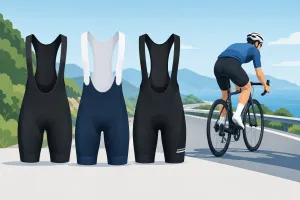
Fit comes before brand, price, or an impressive fabric specification. Bib shorts should feel gently compressive through the thighs and seat when standing, then settle naturally when you bend into your normal riding position. They should not tug at the shoulders, restrict a deep breath, or leave folds of loose material behind the knees.
The chamois is the padded insert, but “more padding” is not the same as more comfort. A well-designed chamois uses different foam densities to protect high-pressure areas while keeping the edges thin enough to move with your pedal stroke. Its shape must also match your posture. A low, aggressive road position generally loads the front of the saddle differently than a more upright gravel or endurance position.
Fabric matters most after the first hour. Look for dense, opaque stretch fabric with enough compression to resist muscle vibration and prevent the legs from creeping upward. Premium knits recover their shape after repeated washing and are less likely to become see-through when stretched over the saddle. On hot days, breathability helps, but a very thin fabric can sacrifice durability and support.
Finally, assess the finishing details. Wide silicone or woven leg grippers should hold without creating a tight ridge. Flat or minimal seams reduce rubbing. A clean-cut leg opening can be exceptionally comfortable, provided the short’s pattern keeps it in place. Mesh bib straps are usually the best choice for summer, while a more structured strap system can provide welcome stability for long-distance riding.
Choose Bib Shorts for the Ride You Actually Do
There is no single best pair for every cyclist. Start with your longest regular ride, your preferred bike, and the conditions you ride through most often.
Road riding and fast group rides
For road riders, a close fit and a road-specific chamois are usually the priority. Choose supportive compression, stable leg grippers, and a pad that works when your pelvis is rotated forward on the hoods or drops. Race-oriented shorts can feel firmer when first tried on, but should not feel restrictive. They are built to remain stable during high-cadence efforts rather than feel soft and loose in a change room.
If your rides commonly run two to four hours, mid-to-high-density foam and excellent seam placement are worth paying for. The difference is often most obvious late in the ride, when tired posture makes every small rub more noticeable.
Gravel and mixed-surface riding
Gravel creates more vibration, more movement on the saddle, and often more time in the saddle than a comparable road ride. A slightly more forgiving chamois and durable fabric are sensible choices. Many gravel riders prefer cargo bib shorts with low-profile thigh or back pockets for gels, a phone, or a light layer.
Pockets are useful only if they do not distort the fit. A loaded thigh pocket should remain stable while pedaling, and items should be easy to access without pulling at the fabric. For long remote rides, that practical storage can outweigh the small aero advantage of a cleaner race short.
Indoor training
Indoor sessions are hot, sweaty, and repetitive. Prioritize breathable straps, quick-drying fabric, and a chamois that stays comfortable through a concentrated hour of seated work. You do not necessarily need your most expensive outdoor bibs for the trainer, but a poor pair will make indoor riding feel far longer than it is.
Keep at least one dedicated trainer pair in rotation if you ride indoors often. Washing them immediately after each session protects both the fabric and your skin.
Long-distance and endurance riding
For fondos, bikepacking days, and long summer missions, stability is the defining quality. The best endurance bib short is not always the plushest one. It is the pair that keeps the chamois exactly where it belongs after six hours, even when you are climbing, standing, stopping, and remounting.
Consider your saddle at the same time. Bib shorts cannot fully compensate for a saddle that is too wide, too narrow, or poorly positioned. If several quality shorts produce pressure in the same location, a professional bike fit or saddle assessment is a smarter next step than buying thicker padding.
How Bib Shorts Should Fit
Try bib shorts on as you would ride: pull them fully into place, settle the chamois under your sit bones, then bend at the hips. The pad should lie flat with no bunching at the groin. The leg panels should feel even from front to back, and the straps should sit against the body without digging in.
A few fit checks separate a promising pair from one that will become a drawer resident:
-The chamois stays close to the body while walking and bending.
-The leg grippers are secure but do not cause numbness or deep marks.
-The straps have light tension and do not pull the short upward at the front.
-There is no exposed or strained fabric when you assume your riding position.
Sizing varies sharply among performance brands. Do not automatically buy the size printed on your usual jeans or casual athletic shorts. Use the brand’s hip and thigh measurements, and treat a fit consultation as part of the purchase when you are investing in a premium pair. A technically excellent short in the wrong size is still the wrong short.
The Chamois Test: Pressure, Not Thickness
Chamois comfort depends on pressure management, moisture control, and movement. A thick pad may initially feel luxurious, yet it can bunch, retain sweat, and create friction during a long ride. A thinner, shaped pad can be more effective when it matches your saddle and riding position.