FREE SHIPPING ON ORDERS $100 +

Euro-Sports | 4 hours ago

Ski Tuning Performance Starts at the Base

A ski can feel fast in the shop and stubborn on the trail 20 minutes later. That gap is usually not about fitness or an expensive new ski. It is about ski tuning performance: how well the base structure, wax selection, base condition, and ski setup match the snow beneath you.


For Ottawa-area Nordic skiers, conditions can change from dry, abrasive cold to humid transformed snow in a matter of days. A tune that works beautifully at -12 C may feel slow at -2 C, especially after fresh snow has been skied in. The right preparation gives you a ski that releases cleanly, carries speed through flats, and remains predictable when the course gets technical.

What Ski Tuning Performance Really Means


Fast skis are not simply heavily waxed skis. Performance comes from managing friction. Snow crystals create heat and moisture as the ski moves over them, and the base needs the right structure and wax hardness to control that interaction. Too much suction in wet snow slows the ski. Too little protection in cold, sharp snow leaves the base dry and draggy.


A proper tune begins with the base itself. A base that is oxidized, scratched, glazed, or contaminated cannot make full use of premium glide wax. Wax can improve it temporarily, but it will not correct an uneven surface or a structure that is wrong for the conditions.


For classic skis, tuning performance includes another critical variable: grip. The kick zone must provide traction without creating drag. That is a balance between ski camber, skier weight, snow condition, and wax or skin selection. A skier who is slipping on climbs wastes energy. A skier with too much grip material loses speed everywhere else.


Start With a Healthy, Structured Base


The base is your ski's running surface, and it deserves more attention than the final race wax. Regular hot waxing keeps polyethylene hydrated and helps protect it from abrasion. But when a ski has visible scratches, uneven glide, or a chalky grey appearance, it may need a more complete service.


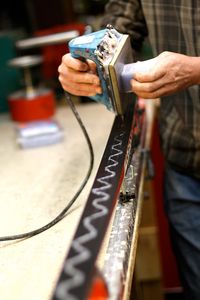
Base grinding restores flatness and adds a deliberate structure. This pattern of fine grooves channels water away from the ski and reduces suction. The ideal structure depends on snow temperature, humidity, crystal shape, and whether the snow is fresh, transformed, or artificial.


A fine structure generally suits colder, drier conditions. A coarser structure can move more water in warm or humid snow. The trade-off matters. A structure designed for spring slush can feel slow and overly aggressive on a dry midwinter morning, while a very fine cold-snow structure may feel sticky as temperatures rise toward freezing.


This is where a precision assessment pays off. At Euro-Sports, SkiSelector technology helps guide ski preparation decisions using the skier, the ski, and expected conditions rather than relying on a generic seasonal tune. It is especially useful for athletes building a race setup or serious recreational skiers who want confidence that their equipment suits the snow they actually ski.


When to Service the Base


There is no single kilometer count that applies to every skier. Artificial snow, abrasive cold tracks, road grit near trailheads, and frequent training all accelerate wear. A skier doing several sessions a week may benefit from regular maintenance throughout the season, while an occasional tourer may need a full service less often.


Watch for a base that looks dry, has deep scratches, or feels noticeably slower than comparable skis on the same day. If your skis pull to one side, feel inconsistent from ski to ski, or have not been stone ground in several seasons, bring them in before race week. A race is the wrong time to discover that the base needs more than a quick wax.


Match Wax to the Snow You Have


Wax selection is where many skiers either overcomplicate the process or leave speed on the table. The goal is not to own every product on the wall. It is to use a sensible system consistently and make decisions from temperature, humidity, and snow condition.


For regular training, a durable hydrocarbon glide wax matched broadly to the temperature range is often the smart choice. It protects the base, keeps the skis moving well, and reduces the effort required between sessions. For racing, a more specific wax and finish can deliver a meaningful advantage, particularly when the snow is fine, fresh, wet, or highly transformed.


New snow and old snow can demand different choices even at the same air temperature. Fresh crystals tend to be sharper and more abrasive. Older snow has rounded crystals and can hold more free moisture. Track temperature also matters more than the reading on your car dashboard. A sunny afternoon can produce a warm surface over a frozen base, while a sheltered section stays significantly colder.


If you are preparing for an event, test on the course whenever possible. Apply one option to each ski or compare sections of a test ski, then ski the same terrain repeatedly. Pay attention to acceleration, coasting speed, and how the ski behaves after several minutes. The fastest option on the first downhill is not always the best option once contamination and moisture build up.


Classic Grip Should Feel Effortless


Classic skiers often judge grip by whether they can climb the steepest hill. That matters, but it is not the full test. Good grip should engage under a deliberate kick and release immediately during the glide phase. If the ski drags on flat terrain, your grip zone may be too long, too thick, or too soft for the conditions.


The correct kick zone starts with fit. A classic ski needs camber suited to the skier's body weight and technique. An experienced skier with strong compression can often use a different setup than a newer skier of the same weight. Skin skis simplify daily preparation, but they still need care. Clean skins glide better, and skin material must be selected and positioned correctly for the conditions and skier.


For waxable classics, temperature is only one input. Snow texture, track glazing, and humidity can change the answer quickly. Carrying a small range of grip options is practical for longer outings, but avoid endlessly layering product on top of a setup that is not working. Clean the kick zone, reassess the snow, and start again with a thinner, more deliberate application.

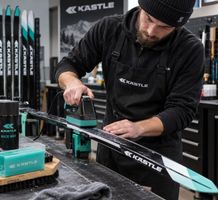
All of our staff are active cyclists, xc-skiers, and runners - so we know how important it is to have equipment properly tailored to an athlete's specific needs.


NOTE! No appointments needed for ski wax service - just bring your skis in and we will go from there!


Most repairs are completed within 48 hours of drop-off. Give us a call at 613-422-5616 to confirm turnaround time for your specific service.

Euro-Sports

More Posts

Ski Base Care Guide for Faster Nordic SkisSki Base Care Guide for Faster Nordic Skis
Ski Base Care Guide for Faster Nordic Skis

A Nordic ski can have excellent camber, a well-chosen grind, and the right flex for your weight, yet still feel slow if its base is dry, dirty, or damaged. This ski base care guide focuses on the work that protects your glide zones between Ottawa freeze-thaw cycles, abrasive hardpack, road grit near trail access points, and long kilometers of training.


Base care is not about chasing perfection after every outing. It is about recognizing what the ski needs, applying the right level of maintenance, and avoiding the shortcuts that create more work later. A few deliberate habits will keep your skis faster, more predictable, and ready when fresh tracks appear.

Nordic Ski Boot Guide: Find Your Best FitNordic Ski Boot Guide: Find Your Best Fit
Nordic Ski Boot Guide: Find Your Best Fit

A Nordic ski boot can make a fast ski feel vague, a perfect wax day feel uncomfortable, and a long Gatineau or Kichi Sibi outing end early. It is the point where your body meets the ski, so fit and compatibility matter as much as ski length, camber, or base structure. This Nordic ski boot guide will help you choose a boot that supports the way you actually ski - whether that means steady classic kilometers, skate intervals, loppet racing, or a mix of Ottawa winter terrain.

Is a Titanium Road Bike Worth It for Canadian Riders?Is a Titanium Road Bike Worth It for Canadian Riders?
Is a Titanium Road Bike Worth It for Canadian Riders?

A rough patch of pavement on the Ottawa River Parkway can tell you more about a frame material than a showroom test ride. A titanium road bike has a distinctive way of taking the edge off broken asphalt while still feeling direct when you stand on the pedals. For riders putting in long training blocks, chasing fondos, commuting through shoulder seasons, or building one road bike to keep for decades, that balance is the point.


Titanium is not automatically the fastest choice, the lightest choice, or the least expensive choice. What it offers is a rare combination of fatigue resistance, ride quality, corrosion resistance, and custom-build potential. If those qualities match how and where you ride, it can be one of the most satisfying investments in cycling.

Classic Versus Skate Skiing for Ottawa SkiersClassic Versus Skate Skiing for Ottawa Skiers
Classic Versus Skate Skiing for Ottawa Skiers

The first few meters usually settle the classic versus skate skiing question. Step into a groomed classic track, settle your weight over one ski, and the movement can feel familiar almost immediately. Push out onto a wide, firm skate lane, however, and the sport becomes more dynamic: balance, edge grip, timing, and a stronger aerobic engine all matter at once.


For Ottawa-area skiers, both techniques make sense. We have reliable Nordic communities, great trail networks, cold spells that reward good wax choices, and variable freeze-thaw conditions that can expose a poor ski setup quickly. The right choice is less about which style is "better" and more about where you ski, what kind of workout you want, and how much time you can give to learning the movement.

Custom Bicycle Geometry Guide for Better FitCustom Bicycle Geometry Guide for Better Fit
Custom Bicycle Geometry Guide for Better Fit

A frame can be beautifully built, fitted with premium wheels and perfectly tuned shifting, yet still feel wrong from the first hard climb. That is where a custom bicycle geometry guide earns its place. Custom geometry is not about making every measurement different for the sake of it. It is about building a bike around the way you move, the terrain you ride, the events you target and the handling you expect when the pace rises.


For Canadian riders, that may mean a fast road position that remains comfortable through a long Gatineau loop, a gravel bike stable enough for washboard roads and loaded overnighters, or a mountain bike that keeps you centered on steep, technical descents. The right numbers create a bike you can ride harder, longer and with more confidence.

How to Clean Disc Brakes Without Contaminating PadsHow to Clean Disc Brakes Without Contaminating Pads
How to Clean Disc Brakes Without Contaminating Pads

A rotor that squeals through every stop after an Ottawa rain ride is not merely annoying. It is usually telling you that grime, chain lubricant, trail spray or cleaning residue has reached the braking surface. Knowing how to clean disc brakes properly restores consistent lever feel and modulation without creating the bigger problem: contaminated pads.


Disc brakes need very little routine attention, but they are intolerant of the wrong products. Treat the rotor and pads as a clean zone, separate from the drivetrain and frame-cleaning work. A few careful minutes after a wet, gritty ride can prevent noise, preserve pad life and keep your bike ready for the next training block.

Steel Versus Titanium Frames: Which Fits You?Steel Versus Titanium Frames: Which Fits You?
Steel Versus Titanium Frames: Which Fits You?

A cold April road outside Ottawa tells you more about a frame than a showroom lift ever will. Broken pavement, grit on the shoulders, a crosswind and four hours to ride: this is where steel versus titanium frames becomes a real choice, not just a material debate. Both can produce a fast, beautifully finished custom bike that stays relevant for years. The better option depends on the way you ride, the fit you need and what you expect your bike to endure.


For riders considering a custom road, gravel or all-road machine, the question is rarely, “Which material is best?” It is, “Which material will make me want to ride this bike in five years?” Steel and titanium answer that question differently.

Gravel Versus Cyclocross Bikes ComparedGravel Versus Cyclocross Bikes Compared
Gravel Versus Cyclocross Bikes Compared

A fast drop-bar bike with room for wider tires can look like either choice from across the parking lot. That is why the gravel versus cyclocross bikes question causes so much uncertainty for riders shopping for one capable machine. The overlap is real, but the priorities are different: one is built to stay composed for hours over changing surfaces; the other is built to attack a hard, technical race for about an hour.


For Ottawa riders, that distinction matters. A Saturday on the Prescott-Russell Trail, the rail trail toward Carleton Place, or a long backroad route in the Gatineau can involve washboard gravel, pavement, mud, sand, and plenty of distance. A cyclocross course can pack off-cambers, barriers, steep run-ups, grass, ruts, and repeated accelerations into a compact circuit. Pick the bike for the riding you actually do most often, not just the event that sounds exciting in January.

How to Set Tire Pressure for Faster Bike RidesHow to Set Tire Pressure for Faster Bike Rides
How to Set Tire Pressure for Faster Bike Rides

A 28 mm road tire at 95 psi can feel quick on a perfectly smooth road and punishingly slow on Ottawa pavement. The same applies off-road: a gravel tire inflated for hardpack can skip across loose corners, while a mountain bike tire set too soft can fold under load. Learning how to set tire pressure is one of the fastest, least expensive ways to improve comfort, control and rolling speed.


The target is not the highest pressure your tyre allows. It is the lowest pressure that gives dependable support, avoids rim strikes or tire squirm, and suits the surface you are actually riding. That sweet spot changes with rider weight, bike weight, tire volume, casing, terrain and conditions.