
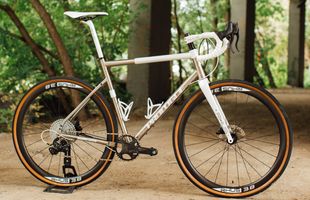
Why Choose a Custom Titanium Gravel Bike
Ottawa gravel can change character three times before lunch: pavement out of the city, washboard on a concession road, then damp doubletrack under the trees. A custom titanium gravel bike is built for that reality, not for a catalogue category. It gives you the freedom to set the fit, handling, tire clearance and component choices around the routes, events and long days you actually ride.
What titanium changes on gravel
A well-designed 3AL/2.5V titanium frame has a distinctive ride quality. It does not erase bumps, and it should not feel vague or soft. Instead, the frame can take the sharp edge off repeated chatter while retaining a direct, predictable response when you accelerate, climb out of the saddle or lean the bike through loose corners.
That balance matters on Canadian gravel. Long stretches of crushed stone, frost-heaved pavement and washboard create fatigue long before a big climb does. Wider tires and lower pressures do most of the work, but a frame that is tuned for real-world surfaces can help you stay fresher through the final hour.
Titanium also suits riders who expect their bike to see a lot. It is highly resistant to corrosion, an advantage through wet spring roads, salty shoulder-season conditions and bikepacking trips where a proper wash may need to wait. Its finish does not rely on paint to protect the material, although a custom paint or anodized detail can make the bike unmistakably yours.
The material has trade-offs. Titanium tubing, welding and finishing demand skilled work, which places these frames firmly in the premium category. Frame weight can also sit above an equivalent high-end carbon chassis, depending on tube selection and intended use. If your single goal is the lightest possible race build, carbon may be the better tool. If you value a long-term frame platform with a ride quality worth coming back to, titanium becomes compelling.
A custom titanium gravel bike starts with fit
The biggest advantage of going custom is not the badge on the downtube. It is starting with your position on the bike.
Stock geometry works well for plenty of riders, particularly when the available sizes match their proportions and intended use. Custom geometry is most valuable when there is a clear reason to adjust the platform: a long torso with shorter legs, a history of neck or hand discomfort, a need for more stack without a tower of spacers, or a preference for a longer and steadier bike for loaded riding.
A proper fit discussion should cover more than inseam and height. We look at current contact points, flexibility, injury history, riding volume, preferred hand positions and how aggressively you want to ride. A rider preparing for fast gravel events may accept a lower front end and more purposeful position. A rider planning eight-hour days on the Prescott-Russell Trail or multi-day routes through the Outaouais may prioritize stable support and more room to move.
Geometry choices then turn that information into handling. Reach and stack set the rider’s working position. Head angle, fork offset and trail influence steering feel. Chainstay length and wheelbase affect stability, climbing traction and how the bike behaves with bags. Even bottom-bracket height is a decision: lower can give a planted cornering feel, while additional clearance can make sense for rougher terrain and bigger tires.
Build around the riding, not the spec sheet
Titanium frame is only the foundation. The build determines whether the completed bike feels sharp, capable or mismatched. Before choosing components, identify the majority of your riding. Not the one dream event on the calendar, but the roads and trails you will use most weekends.
For fast mixed-surface riding and events such as the Quebec or eastern Ontario gravel calendar, a 45 mm tire on a responsive wheelset is often a smart starting point. It rolls quickly on pavement, grips well on dry gravel and keeps steering precise. Riders spending more time on forest roads, chunky rail trails or technical routes may be better served by 45 mm - 55mm tires, tougher casings and lower pressures.
Wheel choice deserves particular attention. Lightweight carbon wheels can bring immediate acceleration and precision, but they should be matched to rider weight, tire volume and the surfaces ahead. A more durable alloy wheelset is not a compromise if it gives you confidence to ride hard and keeps service simple on a loaded trip. Wide internal rims help modern gravel tires hold their shape, but excessively wide rims can change a tire’s profile and clearance requirements. The exact tire and rim combination should be considered together.
Drivetrain selection is equally personal. A 1x setup offers simplicity, chain retention and room for a wide-range cassette. It is an excellent choice for rough terrain, racing and riders who prefer straightforward shifting. A 2x drivetrain provides smaller jumps between gears and a higher top-end, which can matter if your gravel rides include fast group-road sections or long paved approaches.
Do not overlook contact points. Bar width, flare, reach, saddle shape and crank length affect comfort more than many riders expect. A compact bar with moderate flare may suit frequent road transitions. More flare can provide control on steep, loose descents, though too much can feel awkward for riders who spend hours in the hoods. The best build is the one that lets you maintain a strong, relaxed position when the route gets rough.